
🏀 Mechanical Madness: The Biomechanics of Basketball & the Injuries That Try to Bench You
Basketball is a beautiful blend of physics, physiology, and the occasional “why did my knee make that noise?” moment. Every crossover, dunk, and defensive slide is a biomechanical symphony—sometimes accompanied by the tragic violin of a sprain or strain.
Let’s break down how the body moves on the court, why it sometimes breaks down, and what science says about keeping yourself in the game.
🧠 Biomechanics of Basketball: The Science Behind the Swish
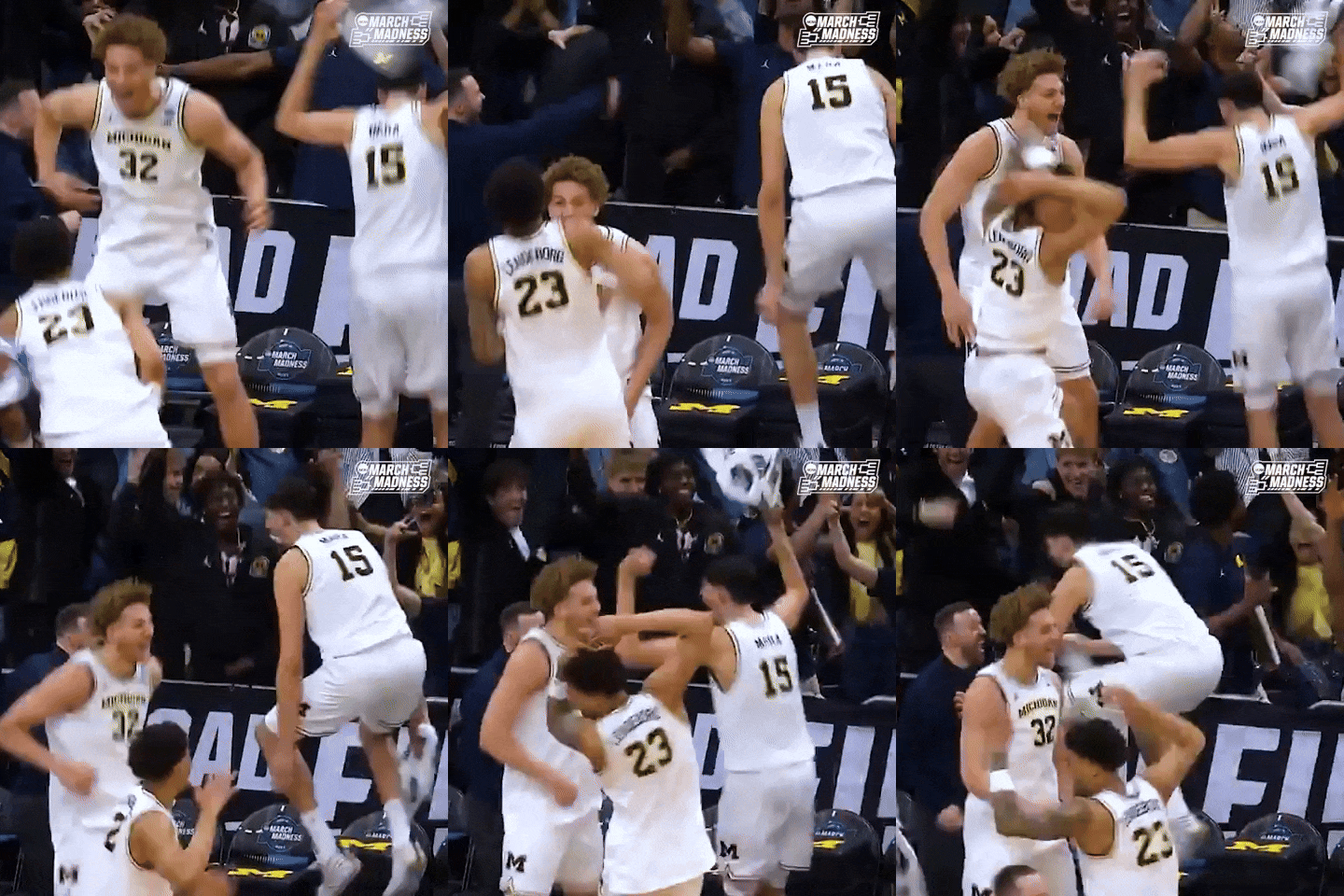
🦵 Jumping: The Vertical Life Crisis
Basketball players jump—a lot. Whether blocking a shot or going for a dunk, the body relies on:
Quadriceps & glutes for explosive upward force
Calf muscles for the final push
Core muscles for stabilization
Tendons & ligaments to absorb landing forces
Landing generates forces up to 6–10× body weight, which is why knees sometimes file HR complaints.
🏃 Cutting & Direction Changes: The ACL’s Worst Nightmare
Basketball requires rapid lateral movement:
Hip abductors stabilize the pelvis
Ankle stabilizers prevent rolling
Knee ligaments (ACL, MCL) resist twisting forces
When biomechanics fail, the ACL says, “I’m out,” and the player says, “Noooo!”
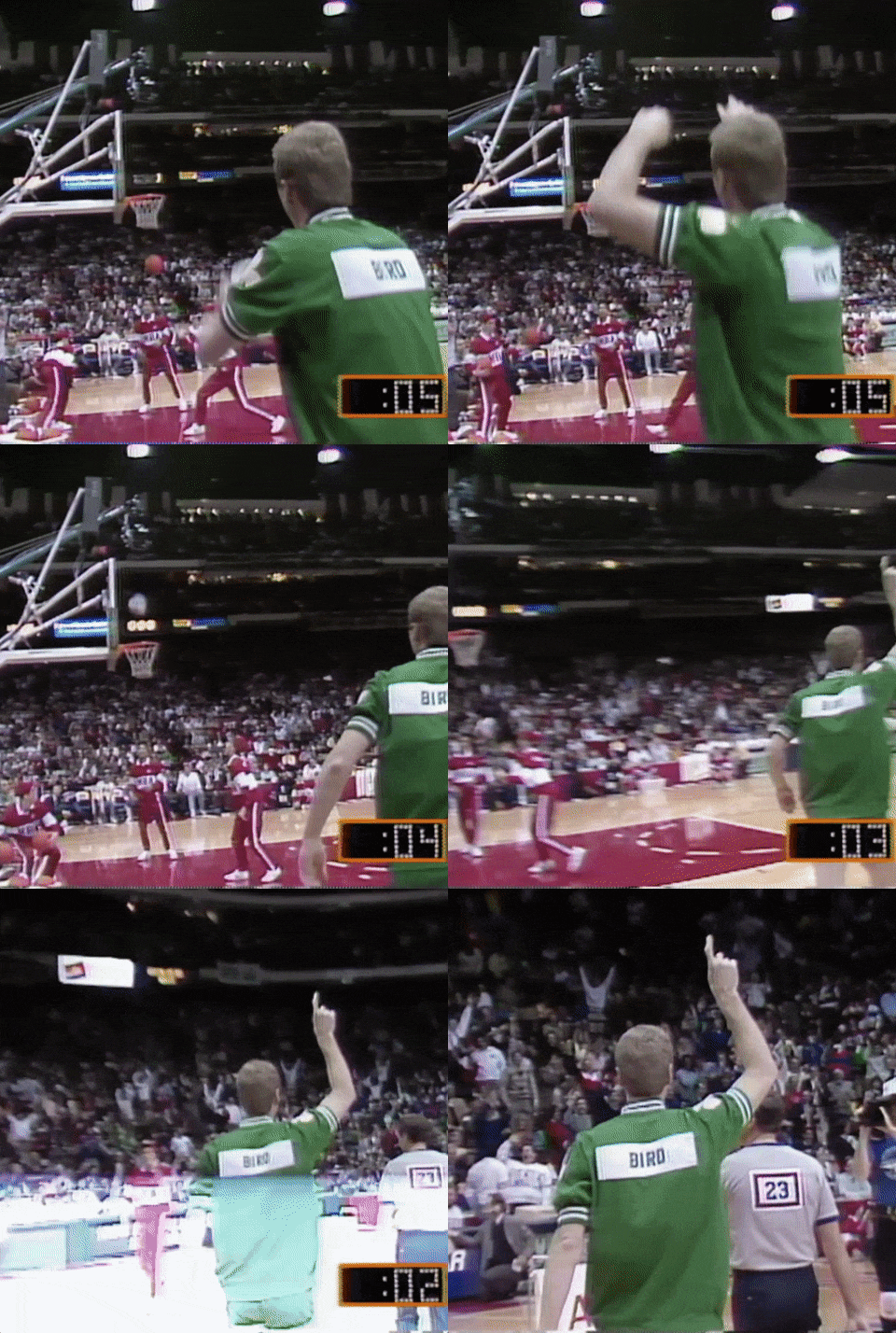
🤲 Shooting: The Kinetic Chain of Glory
A proper jump shot uses:
Legs → hips → core → shoulder → elbow → wrist This chain transfers energy efficiently, like a well‑coordinated office email thread—except someone actually scores.
🏎️ Sprinting & Transition Play
Basketball sprinting is unique:
Short bursts
Frequent deceleration
Constant re‑acceleration
This taxes the hamstrings, Achilles tendon, and lower back—all of which occasionally respond with, “Have you tried sitting down instead?”
💥 Most Common Basketball Injuries
🦶 Ankle Sprains
The king of basketball injuries. Occurs when the ankle rolls inward or outward during landing or cutting. Source: Johns Hopkins Medicine – Sprains & Strains
Why it happens:
Landing on another player’s foot, sudden cutting, or landing with poor ankle stability.
Structures involved: Ankle ligaments called Anterior talofibular ligament (ATFL) and calcaneofibular ligament (CFL).
Medical support: Johns Hopkins identifies ankle sprains as the most common basketball injury.
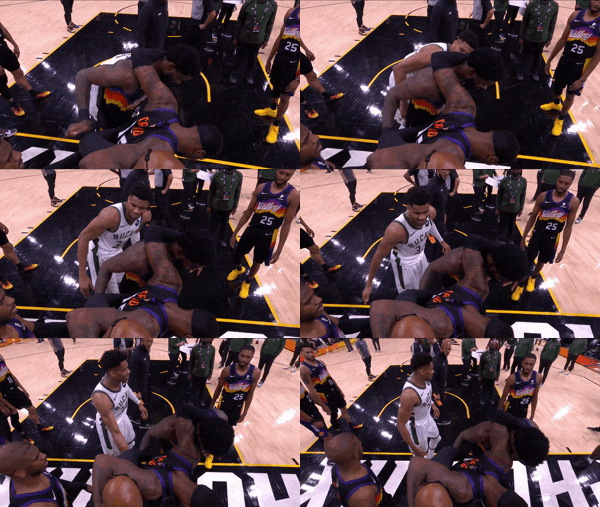
🦵 Jumper’s Knee (Patellar Tendonitis)
Inflammation from repetitive jumping. Symptoms: pain below the kneecap, swelling, and a strong desire to never jump again. Source: Johns Hopkins Medicine – Jumper’s Knee
Why it happens: Repetitive jumping loads the patellar tendon, especially with poor landing mechanics or weak hip stabilizers.
Medical support: Johns Hopkins notes this as a frequent overuse injury in jumping sports.
🦵 ACL Tears
Often caused by sudden stops, pivots, or awkward landings. Biomechanically linked to valgus knee collapse and poor hip control. Source: NIH/PubMed (via pmc.ncbi.nlm.nih.gov)
Why it happens: Sudden deceleration, valgus knee (inward) collapse, poor hip control, or awkward landings.
Medical support: NIH/PubMed research highlights non‑contact ACL injuries as common in pivoting sports like basketball.
🦴 Fractures
Usually from falls or collisions—because elbows and hardwood floors are undefeated. Source: Johns Hopkins Medicine – Fractures
🦵 Lumbar Strain (Lower Back Pain)
Why it happens: Twisting, rebounding, repeated extension, or weak core/hip musculature.
Medical support: Johns Hopkins Physical Medicine & Rehabilitation discusses back strain as a common sports complaint.
🧠 Concussions
Less common than in football but still present usually from collisions or falls.
🏀 Full Basketball Injury‑Prevention Program
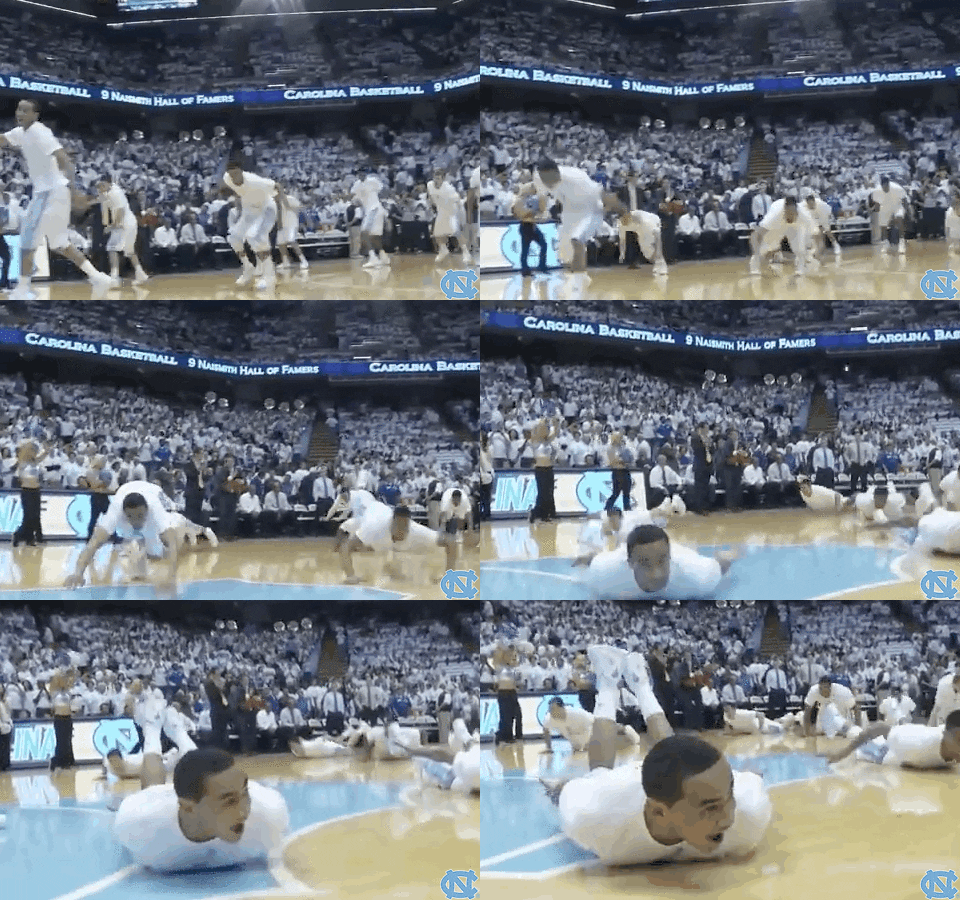
A science‑based routine to protect ankles, knees, hips, and backs, the body parts that complain the loudest.
⭐ Dynamic Warm‑Up (8–10 minutes)
Prepares muscles, increases joint lubrication, and reduces injury risk.
🔥 Movement Prep
High‑knees – 30 sec
Butt kicks – 30 sec
Lateral shuffles – 2 × 20 yards
Backpedal → sprint – 2 × 20 yards
🔥 Mobility
Hip openers (“world’s greatest stretch”) – 5 each side
Ankle dorsiflexion rocks – 10 each side
Thoracic spine rotations – 10 each side
🧠 Why it matters
Dynamic warm‑ups reduce soft‑tissue injuries and improve neuromuscular readiness (supported by Johns Hopkins sports medicine guidance).
⭐ Strength Training (2–3× per week)
Basketball injuries often stem from weak hips, quads, and ankles. Strength fixes that.
🦵 Lower‑Body Strength
Squats: 3 sets×8–12 reps. Builds knee & hip control.
Romanian deadlifts: 3sets×8–12 reps. Protects hamstrings & back.
Split squats / lunges 3sets×8reps each. Improves single‑leg stability.
Calf raises: 3sets×15reps. Supports ankle stability.
🧠 Why it matters
NIH/PubMed research shows that hip and quad strength reduces ACL injury risk, and calf strength improves landing mechanics.
⭐ Plyometrics (2× per week)
Teaches your body to absorb force which is critical for jumping and landing.
🦘 Exercises
Box jumps – 3×5
Lateral bounds – 3×8 each
Drop‑landings (focus on soft knees) – 3×5
Skater hops – 3×10
🧠 Why it matters
Plyometrics improve tendon resilience and reduce patellar tendon stress (supported by Johns Hopkins jumper’s knee guidance).
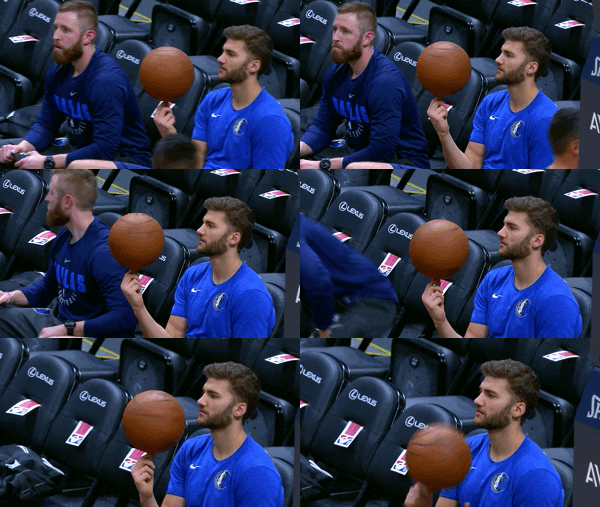
⭐ Balance & Proprioception (3× per week)
Your ankles’ personal security system.
🦶 Exercises
Single‑leg balance – 3×30 sec
Single‑leg balance + ball toss – 3×20 tosses
Bosu or foam pad balance – 3×30 sec
Single‑leg hops in a cross pattern – 3×10
🧠 Why it matters
Proprioceptive training reduces ankle sprain recurrence by up to 50% in multiple PubMed‑indexed studies.
⭐ Core & Hip Stability (3× per week)
The secret sauce of injury prevention.
🧱 Exercises
Planks – 3×30–45 sec
Side planks – 3×30 sec each
Glute bridges – 3×15
Clamshells or banded hip abductions – 3×15
🧠 Why it matters
Weak hips → knee valgus → ACL tears. Weak core → back strain. NIH research repeatedly links hip stability to reduced knee injury risk.
⭐ Landing Mechanics Training (2× per week)
The floor always wins if you land wrong.
🛬 Drills
Drop from 12–18" box → soft landing
Jump → land → stick (no wobble)
Lateral jump → land → stick
Jump → pivot → land
🧠 Key cues
Knees track over toes
Hips back
Chest up
Quiet feet
🧠 Why it matters
Poor landing mechanics are a major contributor to ACL injuries (supported by PubMed ACL biomechanics research).
⭐ Conditioning (2–3× per week)
Basketball is a sprint‑stop‑sprint sport.
🏃 Drills
Suicides / line touches – 4–6 reps
30‑second shuttles – 6–10 reps
3‑on‑3 half‑court scrimmage (high‑intensity)
🧠 Why it matters
Fatigue increases injury risk, especially ankle and knee injuries.
⭐ Cool‑Down & Recovery (5 minutes)
Because your muscles deserve a reward.
🧊 Cool‑down
Light jog → walk – 2 minutes
Quad stretch – 30 sec each
Hamstring stretch – 30 sec each
Calf stretch – 30 sec each
Hip flexor stretch – 30 sec each
🧠 Why it matters
Helps restore tissue length and reduces post‑practice soreness.
🏀 Final Thoughts: Keep Your Body in the Game
Basketball is a biomechanical masterpiece—but it’s also a sport that demands strength, coordination, and injury prevention. To stay healthy:
Strengthen hips & core
Practice landing mechanics
Warm up properly
Don’t ignore pain (your tendons have feelings too… sort of)