
🌊 Don’t Wipeout: A Biomechanical and Psychological Ride Through the Waves
Surfing is one of San Diego’s favorite hobbies, but it can come at a price on the body. In this blog post we are going to go over the biomechanics of surfing, the most common injuries, and how to prevent injury. Kowbunga dudes!
🏄♂️ The Biomechanics of Surfing: How Your Body Becomes a Human Swiss Army Knife
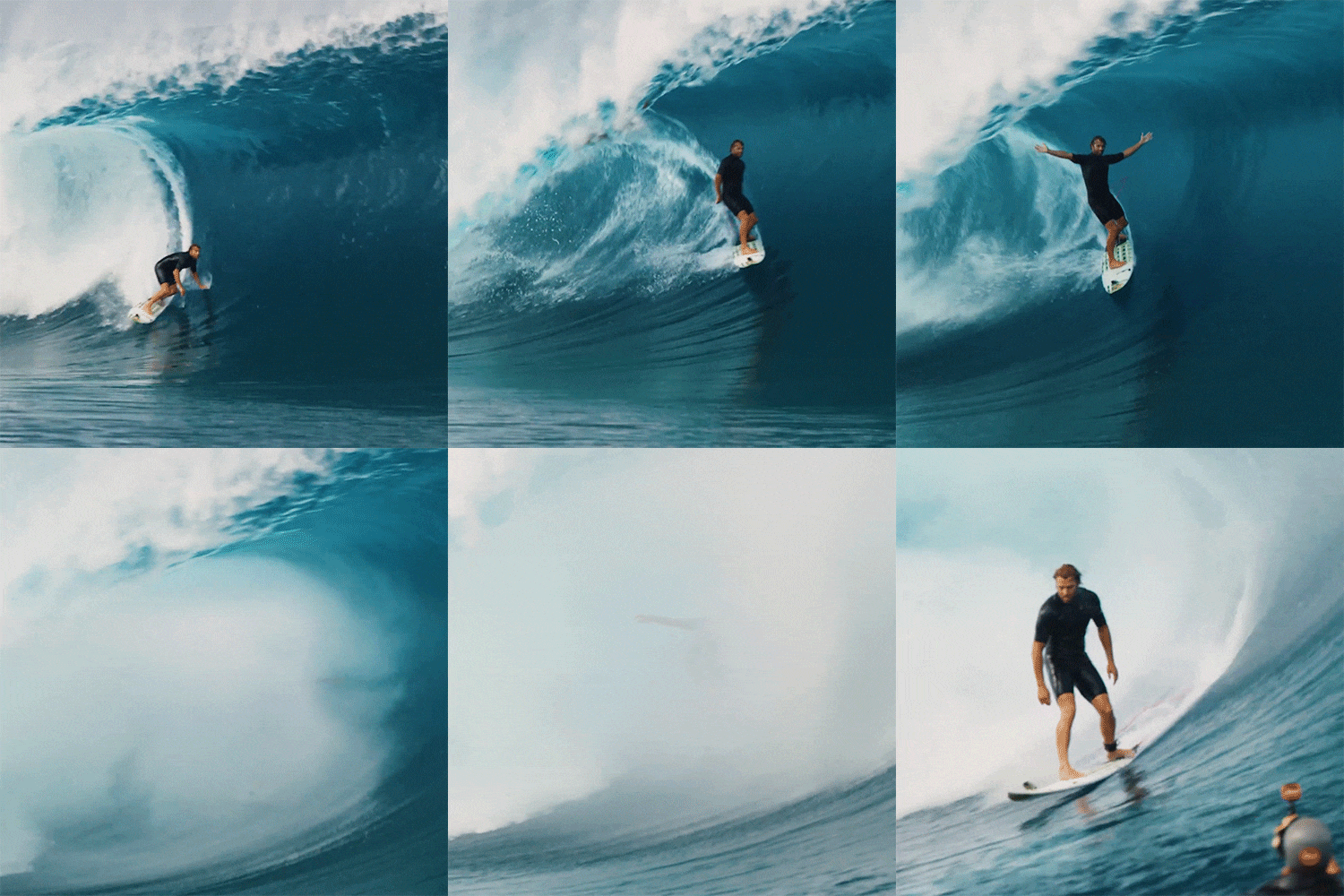
Surfing is basically a full‑body workout disguised as a good time. Peer‑reviewed research shows that surfing requires coordinated upper‑body endurance, explosive lower‑body power, and core stability that would make a Pilates instructor nod approvingly.
Paddling: The Endless Upper‑Body Cardio Machine
According to orthopedic and sports‑medicine research indexed in PubMed, paddling involves:
Repetitive shoulder flexion and rotation
Sustained thoracic and lumbar extension
Heavy use of the rotator cuff, lats, and scapular stabilizers
In other words: your shoulders are doing laps while your spine is auditioning for a role as a boomerang.
The Pop‑Up: A Burpee (ew..Burpees…) That Actually Matters
Biomechanical studies show the pop‑up requires:
Explosive upper‑body push‑off
Strong core activation
Quick hip flexion
Coordinated lower‑limb alignment
It’s essentially a burpee, but with more style and fewer gym mirrors judging you.
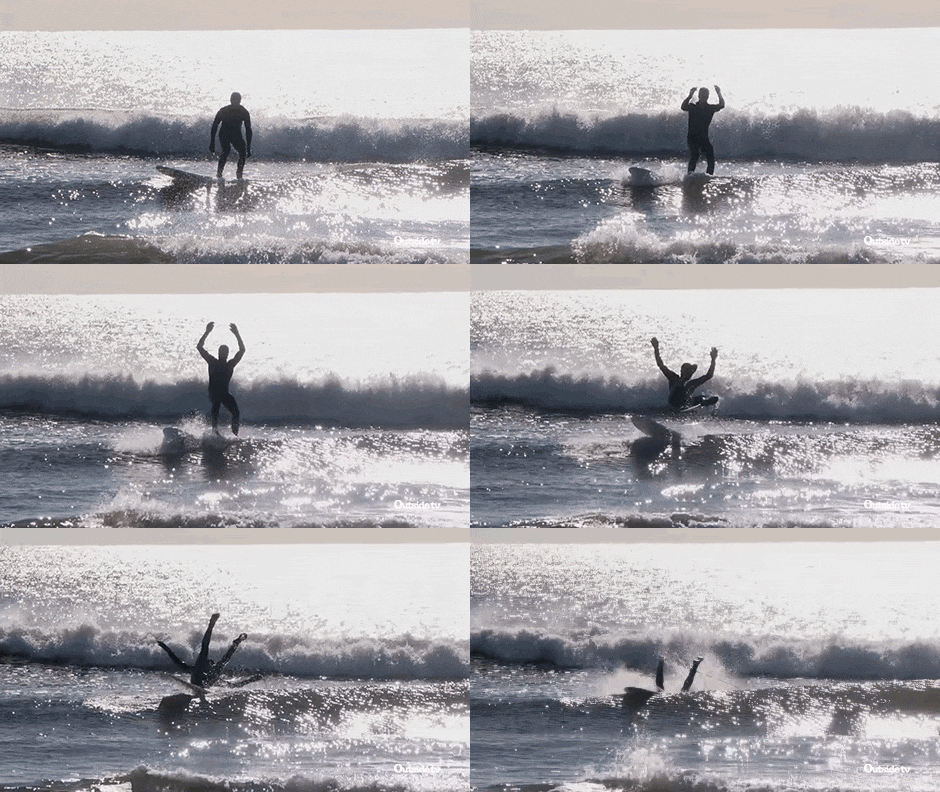
Maneuvering: The Dance Between Gravity and “Please Don’t Fall”
Musculoskeletal modeling research (PubMed‑indexed) shows:
The front leg absorbs most of the load during turns
The rear leg fine‑tunes board angle and pressure
Ankles, knees, and hips work together like a well‑rehearsed boy band
If you’ve ever wondered why surfers have great balance, it’s because the ocean is a very unforgiving dance partner.
💪 Physical Benefits of Surfing: Science Says It’s Basically a Gym Membership With Better Views
Cardiovascular Fitness
Paddling is a high‑repetition aerobic activity. Your heart rate goes up, your lungs work harder, and your watch thinks you’re running… but wetter.
Strength & Endurance
Surfing builds:
Shoulder endurance (rotator cuff, deltoids)
Core stability (obliques, transverse abdominis)
Lower‑body strength (glutes, quads, calves)
Basically, surfing trains everything except your ability to resist buying another surfboard.
Mobility
Thoracic extension/rotation, hip rotation, and ankle mobility all get a workout. Your joints become more flexible, whether you like it or not.
🧠 Mental Health Benefits: The Ocean Is Nature’s Therapist
NIH‑supported research consistently shows that:
Exercise reduces stress
Nature exposure improves mood
Mindfulness enhances emotional regulation
Surfing combines all three, plus the added bonus of saltwater exfoliation.
Surfing won’t solve all your problems, but it will make you too tired to care about most of them.
🩺🌊 The Most Common Surfing Injuries
Surfing injuries fall into two big categories:
Overuse injuries (from paddling, repetitive motions, and posture)
Acute injuries (from wipeouts, impact, or awkward landings)
Let’s dive into each one.

🩺 Shoulder Overuse Injuries
Includes:
Rotator cuff tendinopathy
Shoulder impingement
Biceps tendinopathy
Why it happens:
Surfing involves hundreds to thousands of paddle strokes per session. Peer‑reviewed studies on paddling biomechanics show that the shoulder repeatedly moves through flexion, abduction, and internal rotation while the scapula must stabilize the arm against the water’s resistance.
Over time, this leads to:
Irritation of the rotator cuff tendons
Compression of structures under the acromion (impingement)
Fatigue of scapular stabilizers
What it feels like:
Pain when lifting the arm
Pain with paddling
Weakness or “pinching” sensations
Your rotator cuff is basically saying, “I love surfing, but could we not do 1,200 reps today?”
🩺 Lumbar Spine Strain (Low Back Pain)
Why it happens:
Paddling requires sustained lumbar extension — your lower back is arched for long periods. Peer‑reviewed biomechanical studies show this increases load on:
Lumbar facet joints
Paraspinal muscles
Hip flexors (which tighten and pull on the spine)
What it feels like:
Aching in the lower back
Tightness after long sessions
Pain when bending backward
Your spine is trying to be a surfboard… but it was not designed to be a surfboard.
🩺 Ankle Sprains
Why it happens:
Surfing requires rapid adjustments of foot and ankle position to maintain balance. During turns, the ankle experiences:
Inversion/eversion forces
Sudden weight shifts
Unexpected torque during wipeouts
Studies using musculoskeletal modeling show the front ankle absorbs significant load during carving and bottom turns.
What it feels like:
Swelling
Pain on the outside or inside of the ankle
Instability
Your ankle is doing ballet on a moving platform. Sometimes it misses a step.
🩺 Knee Sprains & Overuse Injuries
Includes:
MCL sprains
Meniscus irritation
Patellofemoral pain
Patellar tendinopathy
Why it happens:
Turns and maneuvers place rotational forces on the knee. The front knee often absorbs the brunt of the torque, especially in:
Cutbacks
Bottom turns
Hard rail engagement
Biomechanical studies show the knee must stabilize against both valgus (inward collapse) and rotational forces.
What it feels like:
Pain with twisting
Pain when crouching
Clicking or stiffness
Your knee is the unsung hero of every good turn — until it files a complaint.
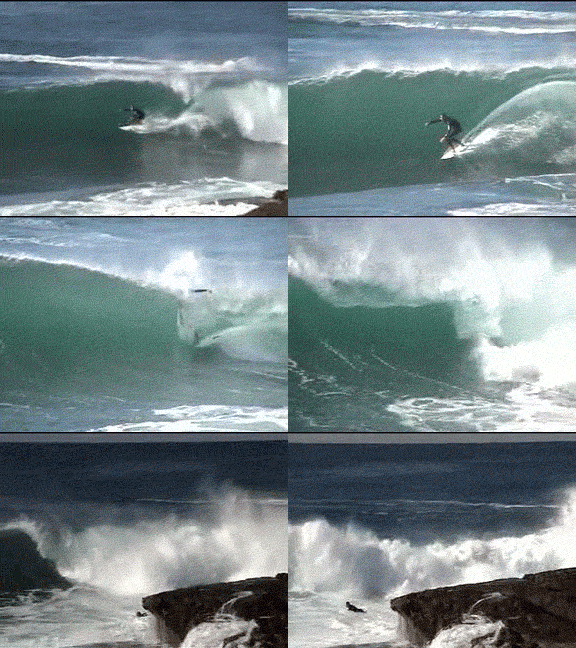
🩺 Lacerations & Contusions
Why it happens:
These are the most common acute injuries in surfing, according to multiple injury‑surveillance studies. Causes include:
Board rails
Fins (the #1 culprit)
Reef or rocks
Other surfers (the ocean’s version of traffic)
What it feels like:
Cuts
Bruises
Scrapes
“I should’ve worn a wetsuit” moments
Surfboards are friends… except when they’re not.
🩺 Surfer’s Myelopathy (Rare but Serious)
Why it happens:
This is a non‑traumatic spinal cord injury associated with prolonged, extreme lumbar hyperextension — often in beginners who paddle stiffly.
Peer‑reviewed case reports describe:
Reduced blood flow to the spinal cord
Sudden onset of back pain
Neurological symptoms
A reminder that warm‑ups matter and your spine prefers “gentle banana,” not “overcooked shrimp.”
🩺 Rib & Chest Wall Injuries
Includes:
Costochondritis
Rib bruising
Intercostal muscle strain
Why it happens:
Repeated pressure from lying on the board + paddling mechanics can irritate the rib joints and muscles.
Your ribs are tired of being used as a surfboard cushion.
🩺 Head & Facial Injuries
Why it happens:
Board impact
Ocean floor
Collisions with other surfers/rocks/marine life
Unexpected lip of the wave
Sometimes the wave high‑fives your face… a little too enthusiastically.
🩺 Foot Cuts & Reef Injuries
Why it happens:
Sharp reef
Shells
Rocks
Sea urchins (the ocean’s landmines)
Your feet are meeting the reef… and the reef always wins.

🏋️♂️ Prevention Focused: Exercises & Stretches to Prevent or Manage Surfing Injuries
Evidence‑informed, clinically appropriate, and pun‑approved.
Shoulder Overuse
Exercises
Band external rotations – 3×12
Scapular retraction rows – 3×12
Prone Y/T/W – 3×10
Stretches
Pec doorway stretch – 30 sec × 3
Thoracic extension on foam roller – 1–2 minutes
Witty note: Your shoulders will thank you. Your wetsuit might not.
Low Back Pain
Exercises
Bird‑dog – 3×10
Dead bug – 3×10
Glute bridges – 3×12
Stretches
Child’s pose – 1 minute
Hip flexor stretch – 30 sec × 3
Your spine deserves a vacation too.
Ankle Sprains
Exercises
Single‑leg balance – 30–60 sec
Band inversion/eversion – 3×12
Lateral hops – 3×10
Stretches
Calf stretch – 30 sec × 3
Ankle mobility rocks – 10 reps
Witty note: Strong ankles = fewer surprise underwater cartwheels.
Exercises for Knee Stability
Exercises
Clamshells – 3×15
Lateral band walks – 3×10
Split squats – 3×10
Stretches
Hamstring stretch – 30 sec × 3
Quad stretch – 30 sec × 3
Your knees are the unsung heroes of every good cutback.
🌅 Conclusion: Surfing Is Equal Parts Science, Sweat, and Saltwater
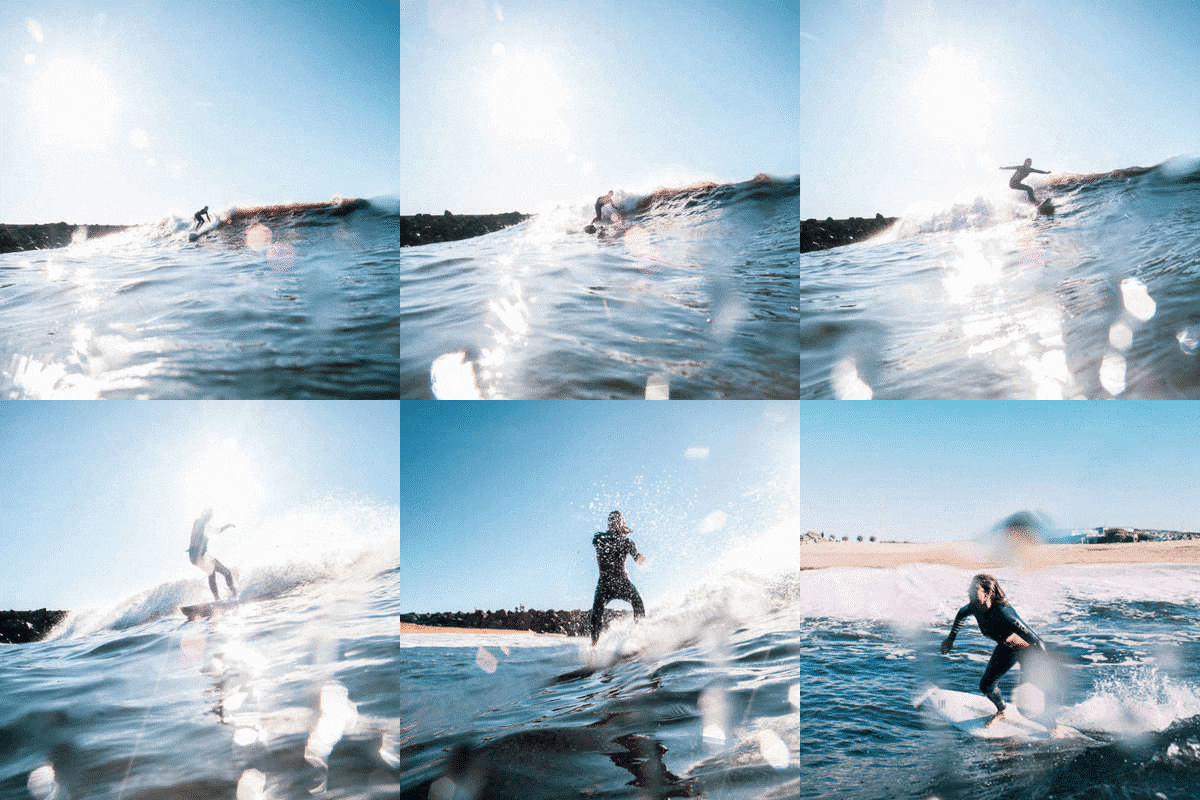
Surfing is a biomechanical masterpiece, a mental health booster, and occasionally a slapstick comedy routine performed in front of seagulls. Peer‑reviewed research shows that with proper conditioning, mobility work, and awareness of common injury mechanisms, surfers can stay healthier, ride longer, and wipe out with dignity.