
Sink or Swim: The Science Behind Water Polo
Water polo is often described as one of the world's most physically demanding team sports — and once you understand what the body is doing every second of a match, that claim is hard to argue with. Players sprint, wrestle, tread water, absorb contact, and hurl a ball at speeds rivaling a Major League fastball — all without ever touching the bottom of the pool. No ground. No footing. No mercy.
Beneath the splashing chaos lies a fascinating interplay of hydrodynamics, muscular mechanics, and athletic endurance. Whether you're a coach, an athlete, a sports medicine professional, or just someone who stumbled here from a very specific corner of the internet. The breakdown of water polo's biomechanics and injury landscape is for you.
A Body in Perpetual Motion
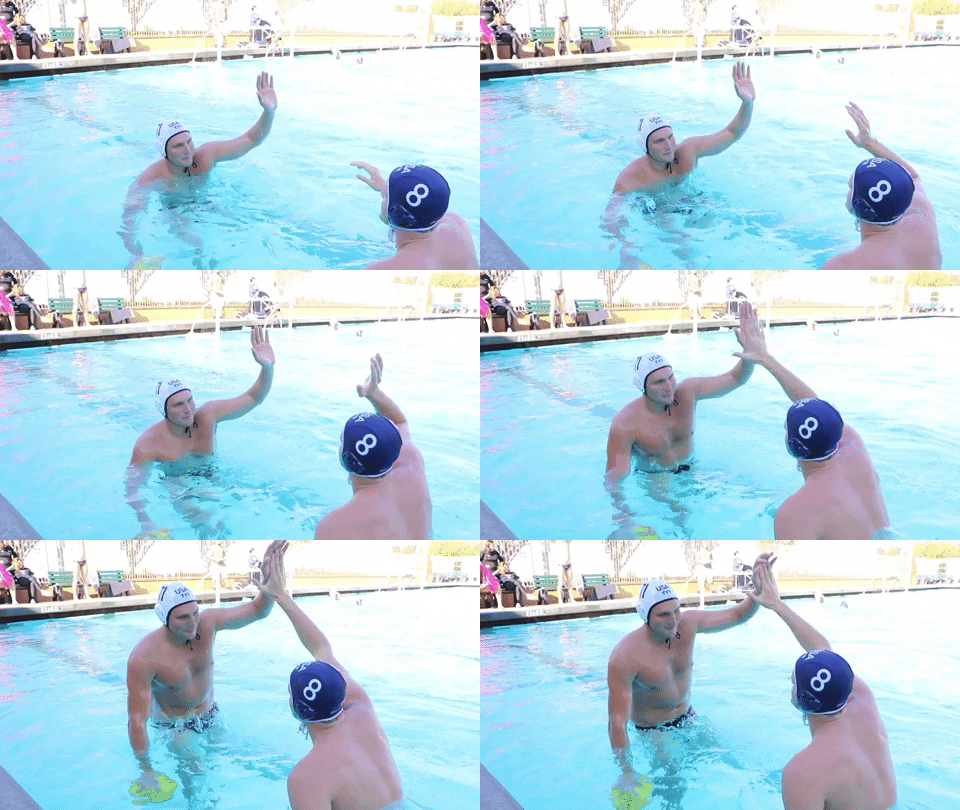
Water polo is classified as an intermittent sport — a relentless cycle of explosive anaerobic bursts layered over a sustained aerobic base. Research published in Sports Medicine confirms that game analyses reveal intense activity intervals interspersed with lower-intensity movement, placing simultaneous extreme demands on both the cardiovascular and neuromuscular systems.
Elite match analyses show players undergo more than 330 direction changes during a single game, most lasting fewer than 15 seconds at a time. To stay competitive through all of them, the body relies on two biomechanical pillars: the eggbeater kick and the overhead throw.
Direction changes per elite match: 22%
Drop in kick force at full fatigue: 51%
Of all injuries involve the shoulder: 80%
Shoulder pain prevalence at elite level

🦵 The Eggbeater Kick: Engineering Vertical Force
If water polo were a Marvel film, the eggbeater kick would be the origin story. It is the foundational skill that allows players to remain fully vertical with both arms free — whether holding a ball, grappling with a defender, or preparing to shoot.
According to peer-reviewed research from PMC/NIH, the eggbeater kick involves a simultaneous combination of hip and knee flexion/extension, hip adduction and abduction, and hip internal and external rotation. The torso stays upright while the thighs remain parallel to the water surface, left leg clockwise, right leg counter-clockwise, in an alternating cyclical pattern.
Research in the Journal of Applied Biomechanics (PubMed) identified that maximum hip abduction, hip flexion range of motion, and knee flexion angular velocity together account for roughly 81% of the variance in vertical force output. Wider hip abduction and faster knee cycles produce more lift — and players with stronger eggbeater mechanics jump higher, shoot harder, and defend more effectively.
Fatigue changes everything. A PubMed study tracking 12 elite players found mean vertical force dropped from ~212 N to ~164 N at complete fatigue — a 22% reduction. As technique degrades, joint angles shift in ways that both reduce performance and significantly elevate injury risk, particularly at the medial knee.
🤾 The Overhead Throw: Power Without a Foundation
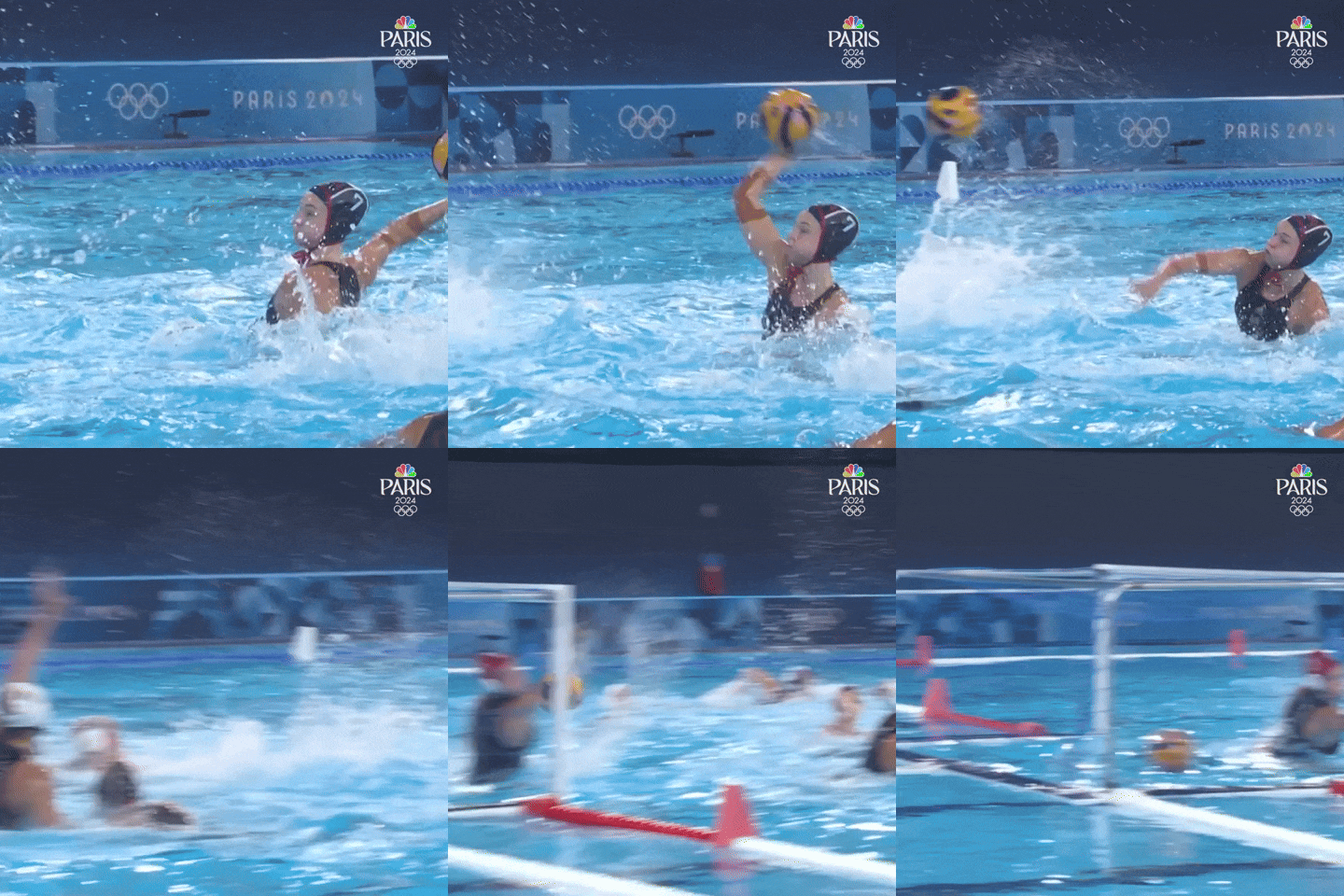
In most overhead sports — baseball, handball, javelin — the athlete plants their feet, loads through the lower body, and drives power from the ground up. Water polo players do not have that luxury. The moment they cock their arm to throw, they are floating.
Unlike most throwing sports where the cocking phase is largely passive (forward body momentum helps bring the arm back), the water polo cocking phase is active and sustained. The player must hold the ball overhead — out of the water, in faking position — while simultaneously maintaining vertical lift. This dramatically increases demand on the shoulder's internal rotators and surrounding stabilizers.
A 2024 PubMed study from the University of Zaragoza found significant positive correlations between lean mass, wingspan, trunk length, shoulder isometric strength, and throwing velocity in elite male players. The joint torques generated at the shoulder are comparable to those in baseball pitching, producing internal impingement of the rotator cuff tendons, the superior capsulolabral complex, and the long head of the biceps anchor against the glenoid rim.
"The aquatic environment makes it difficult to generate high throwing force without a solid base of support — placing disproportionate stress on the core, scapula, and rotator cuff with every single throw."
Scapular control is a critical but often overlooked link in this chain. Research published in Applied Sciences (2024) demonstrated that the scapula serves as the internal connector between the trunk and the throwing arm — and any deviation in scapular alignment (scapular dyskinesia) is a documented risk factor for shoulder injury and glenohumeral instability in overhead athletes.
Common Injuries: The Usual Suspects
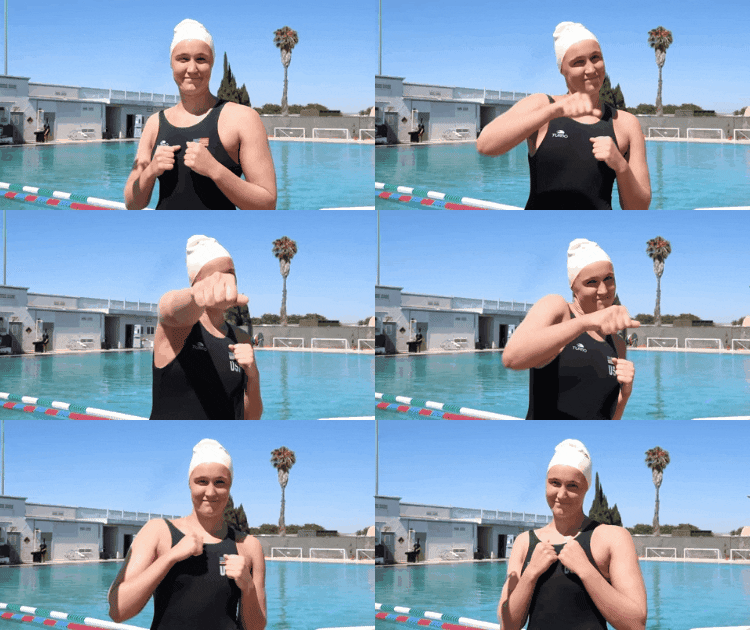
Water polo is a contact sport played in a medium where referees can't see most of the contact. Add repetitive overhead mechanics and relentless leg work, and you have the ideal setup for both acute trauma and chronic overuse pathology — often layered on top of one another.
🫱 Shoulder: Rotator Cuff & Labral Injuries
Most Common - Overuse +Acute
Shoulder injuries account for up to 51% of all water polo injuries, with prevalence values as high as 98.4% in cross-sectional studies. Rotator cuff tendinopathy is the most common collegiate diagnosis; capsulolabral complex lesions and SLAP tears dominate in players with instability histories. Structural changes are detectable on MRI even in asymptomatic players.
🦵 Knee: MCL Overuse & Tendinopathy
Leg work accounts for 40–55% of match time depending on position. The eggbeater kick places repetitive rotational compression on the medial knee, leading to chronic MCL overuse syndrome and progressive degenerative changes. Patellar tendinopathy (jumper's knee) is also prevalent from explosive acceleration demands.
💥 Head, Face & Fingers: Contact Injuries
Head and face injuries make up nearly 19% of collegiate injuries in a 5-year Pac-12 study. Ball impacts, incidental elbows, and grappling contact all contribute. Finger and wrist injuries rank third at 11.7%, occurring most often during defensive play and physical positioning under the ball.
💪 Medial Epicondylitis: Elbow Overuse
Elbow pain results from repetitive overhead throwing without ground-reaction force support. PMC/NIH research identifies this as a diagnostic challenge, overlapping with medial epicondylosis and ulnar collateral ligament stress — conditions also seen in baseball pitchers and javelin throwers.
🔄 Hip, Groin & Lumbar Spine
The constant hip rotation of the eggbeater kick combined with rotational throwing loads the hip flexors, adductors, and lumbar spine. Hip and groin pain spikes with training volume increases or when strength and recovery lag behind workload. Lumbar stress injuries warrant monitoring in high-volume players.
🏊 Swimmer's Shoulder (Supraspinatus Impingement)
Distinct from acute throwing injuries, swimmer's shoulder is driven by high-volume overhead swimming strokes compounded by throwing demands. A competitive swimmer can exceed 4,000 strokes per shoulder per session. Water polo players layer aggressive throwing mechanics on top of this baseline, creating a compounding overuse picture.
Stay in the Pool: Exercises
The good news — if you can call it that while treading water with a 6'4" center waving a fist at you, is that the research on injury prevention in water polo is substantive and actionable. The key principles: strengthen the rotator cuff and scapular stabilizers, balance internal/external rotation ratios, develop hip mobility, and build core stability that holds up when the legs are your only anchor.
The Thrower's Ten (T10) Program: A 2025 PMC study in 46 water polo athletes found that the T10 protocol, performed 3× weekly for 10 weeks, improved shoulder strength, ER/IR balance, and stability. Its combination of concentric, eccentric, and stabilization exercises in both open and closed kinetic chain patterns directly targets the imbalances water polo creates.
External Rotation at 90 degrees Abduction
With the arm abducted to 90° and elbow bent 90°, rotate externally against band resistance. This targets the infraspinatus and teres minor — muscles most taxed during the deceleration phase of a throw. Perform 2–3 sets of 15 reps. Research from PMC confirms that ER:IR strength ratios are a key predictor of shoulder injury risk, and force imbalances in the rotator cuff directly increase injury risk during the throwing deceleration phase.
Prone Ys, Ts, Ws: Mid and Lower Trapezius Muscle Strength
Lying face-down on a bench or Swiss ball, lift lightweight dumbbells through T (90° abduction), Y (diagonal overhead), and W (elbow bent, external rotation) positions. Activates the lower trapezius, rhomboids, and serratus anterior — muscles responsible for healthy scapular upward rotation. Scapular dyskinesia is a documented risk factor for shoulder injury in overhead water polo athletes.
Wall Ball Circles: Shoulder Stability
Stand 6–8 inches from a wall, press a weighted ball overhead with one hand, and trace small clockwise and counterclockwise circles with gentle compression. Repeat at multiple angles. Builds shoulder stability across the full range of shooting positions and mimics the isometric demands of holding a faking position — a challenge unique to water polo that most other throwing sports don't replicate.
Prone Ball Drop & Catches: Rotator Cuff Endurance
Lying prone (face down) on a Swiss ball with feet braced against a wall, hold a weighted ball in a throwing position, drop it, and catch it before it hits the ground. Perform 10 slow drops followed by 10 rapid ones; repeat 2–5 sets. This trains the eccentric deceleration capacity of the rotator cuff. The phase of throwing most responsible for posterior shoulder injuries and fatigue-related breakdown.
90/90 Hip Stretch with Side-to-Side Rotations: Mobility and Medial Knee Protection
Seated in a 90/90 position (both knees at 90° facing opposite directions), hold each side for 45–60 seconds and alternate between internal and external rotation. PubMed research on breaststroke mechanics — directly applicable to the eggbeater kick — shows that limited hip ROM forces compensatory torque onto the knee joint. Improving hip flexion and rotation ROM is one of the most effective strategies for reducing medial knee stress. Best performed as dry-land warm-up before pool sessions.
Copenhagen Adductor Exercise: Hip and Groin Strength
Lying on your side with the top foot elevated on a bench, lift the lower leg upward using adductor contraction and hold. Adductor strengthening is strongly supported by research on hip and groin injury prevention in intermittent sports — particularly for athletes whose sport demands repetitive hip abduction/adduction cycles, as the eggbeater kick does across an entire match. Progress from bent-knee to straight-leg variations as strength improves.
Pallof Press: Core Stability
Using a cable or resistance band anchored at chest height, press directly forward and hold for 2–3 seconds before returning. The goal is to resist the rotational pull, not move with it. Builds anti-rotation core stability essential when generating throwing power without ground contact. Strong rotational core control reduces compensatory stress transferred to the shoulder, particularly under fatigue.
Isokinetic External Rotation and Internal Rotation Ratio Connection : Shoulder Balance
A 2024 PMC study in competitive water polo players found that a targeted isokinetic intervention correcting ER:IR imbalances significantly improved injury risk profiles. This requires assessment by a sports physiotherapist using isokinetic dynamometry to identify individual imbalances — particularly in the dominant throwing arm. Of all prevention strategies available, addressing ER:IR ratio imbalances is among the highest-yield interventions for overhead athletes.
"Water polo players should begin prevention programs with low resistance and high repetitions, gradually progressing load — allowing muscles, tendons, and joints to adapt and correctly form motor patterns before intensity increases."
Final Thoughts
One final note worth emphasizing: fatigue is not just a performance problem, it is a safety problem. PMC eggbeater kick research demonstrates that joint mechanics change measurably as players tire. Coaches and athletes should monitor training volume carefully, ensure adequate recovery between sessions, and treat proper warm-up and cool-down not as optional extras but as non-negotiable pillars of every practice and competition.
Water polo demands an extraordinary body. Give it the preparation it deserves — and it will hold up in the deep end, every time. 🏊
⚠️Medical Disclaimer: This article is for informational and educational purposes only. It does not constitute medical advice and is not a substitute for evaluation and treatment by a licensed healthcare professional. If you are experiencing pain or injury, please consult a qualified sports medicine physician or physical therapist.