
The Gaming Chair Posture Crisis: Your Spine Doesn’t Care About Your Kill Count
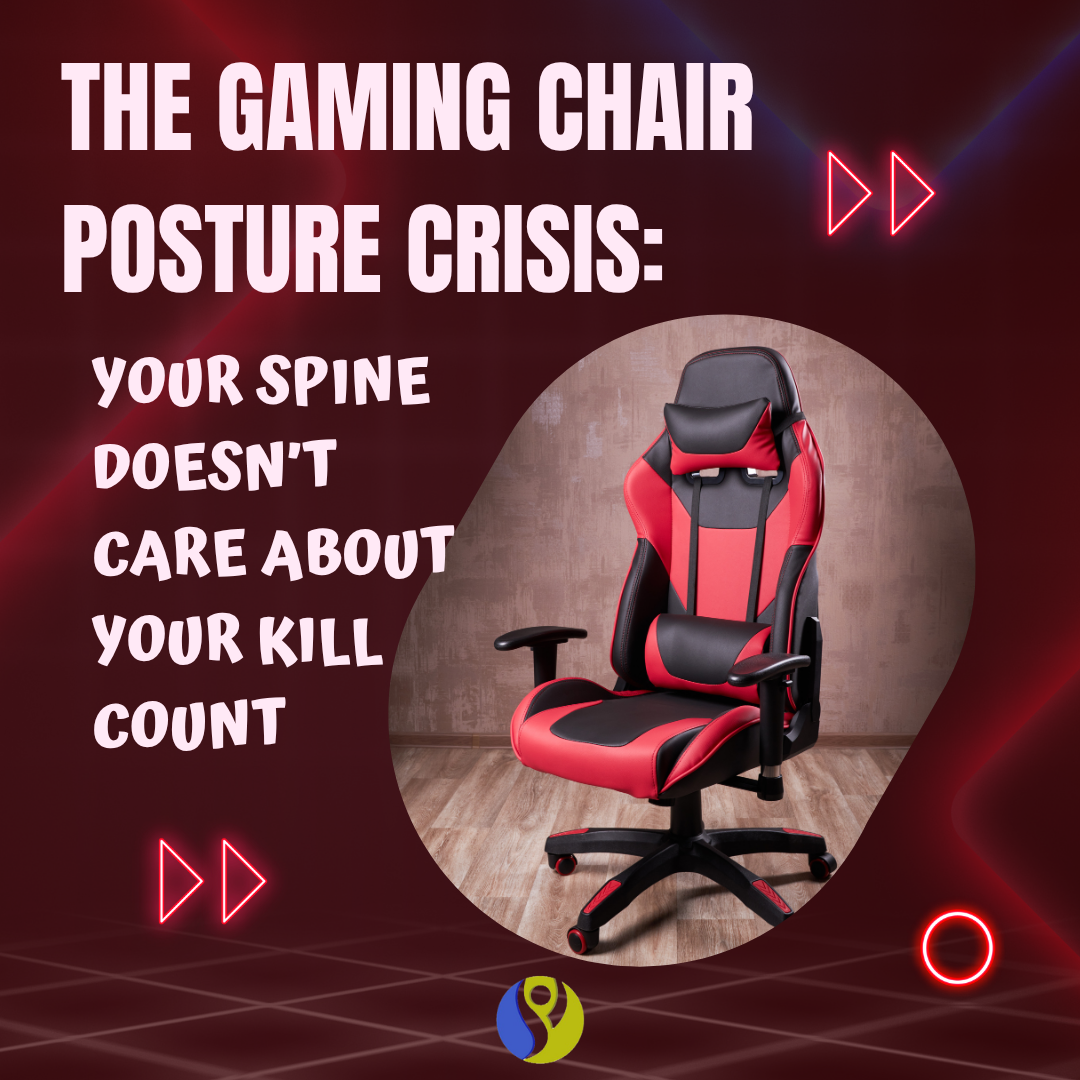
Picture a professional athlete. You're probably imagining someone with elite conditioning, a rigorous training schedule, a team of physios, and a resting heart rate that could embarrass most houseplants. Now picture that same athlete, same training hours, same competitive pressure, same organizational support, except they are sitting very, very still, in a bucket seat shaped like a racing car, while their fingers move at approximately the speed of a hummingbird's wings. Welcome to esports. Please watch your posture on the way in.
Esports is now a legitimate, globally recognized competitive discipline, with prize pools rivaling traditional sports tournaments, full-time professional athletes, university varsity programs, and dedicated sports medicine professionals. It is also, from a musculoskeletal standpoint, a slow-motion crisis being played out across the spines, wrists, and necks of millions of young people who have been sold the idea that sitting in a chair shaped like a spaceship automatically makes you an athlete.
This article, meticulously researched, moderately alarmed, and occasionally amused explores what the peer-reviewed science tells us about the physical toll of competitive gaming, why the gaming chair is not the ergonomic savior it was marketed to be, and what chiropractors and allied health professionals can do to help a generation of athletes who never leave their desks.
Yes, Gamers Get Injured. A Lot.
Let's address the skepticism head-on. When people hear the phrase "esports injury," the reflexive response is often a raised eyebrow and an invitation to go touch some grass. But the research is unambiguous: competitive gaming generates a significant and clinically meaningful burden of musculoskeletal injury, and it does so faster, and in younger athletes, than most traditional sports.
A 2021 paper published in the Journal of Orthopaedic & Sports Physical Therapy (PubMed) established that the physical demands placed on esports competitors are triple those of office workers, a finding that tends to surprise people who assume sitting quietly in front of a screen is about as demanding as a nap. The distinction is that professional esports athletes are performing extraordinarily fine-motor, high-frequency movements continuously for hours on end, with virtually no postural variation.
42% Of E-sports athletes report neck & back pain
70% Report wrist or hand pain at elite level
86% Of competitive gamers had at least one musculoskeletal injury site
40% Report doing no physical exercise whatsoever
A cross-sectional study published in PMC/NIH found that among competitive video gamers, 86.2% had at least one musculoskeletal injury site, with the lower back (63.8%), neck (50%), and hand/wrist (44.8%) leading the field. Only 16 out of 116 participants (about 14%) had no musculoskeletal complaints at all. These were not chronic patients. Many were teenagers and young adults with careers barely underway.
🎮 A 2019 study published in PMC/NIH found that 40% of professional esports athletes do not participate in any form of physical activity. The study also identified eye fatigue as the number-one complaint, followed by back and neck pain. So to summarize: many professional athletes are not exercising, their eyes are exhausted, and their spines are staging a quiet protest. The esports performance team has its work cut out.
Actions per minute — E-sports vs. Other Occupations
Elite esports (APM): 500–600
Office workers (APM): 130–180
Assembly line workers ~120
Air traffic controllers ~80
Source: PubMed / J Orthop Sports Phys Ther 2021 · International Journal of Esports
Forward Head Posture: Carrying a Bowling Ball at an Angle
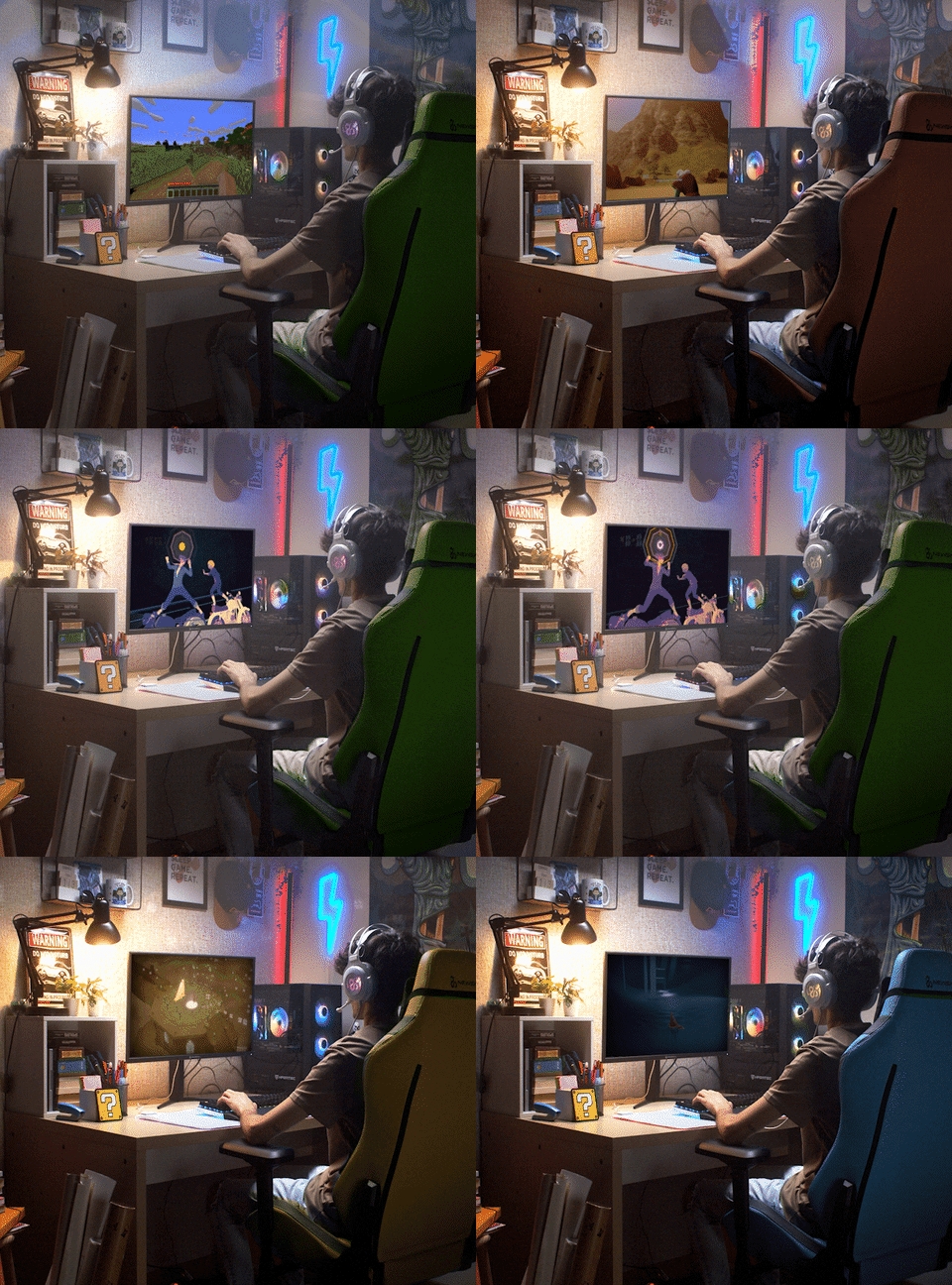
Your head weighs approximately 10 to 12 pounds in its neutral, balanced position, roughly the weight of a regulation bowling ball. In that neutral alignment, the cervical spine manages this load with elegant efficiency. The moment you shift your head forward, toward the screen, toward the controller, toward the perfectly rendered battlefield that desperately needs your attention right now, the effective load on the cervical spine increases dramatically.
According to a landmark PubMed study by Dr. Kenneth Hansraj assessing cervical spine stress across varying head tilt angles, each inch of forward displacement adds approximately 10 pounds of effective load to the structures of the neck. A 15-degree forward tilt corresponds to about 27 pounds of force. At 60 degrees, the approximate angle of someone hunched over a smartphone or leaning toward a monitor, the effective load on the cervical spine reaches approximately 60 pounds. That is roughly equivalent to carrying a second-grader on the back of your neck, indefinitely, while trying to win a round of competitive play.
🔬 What the research shows: A case series published in PMC/NIH examined spine posture, mobility, and stability in 48 professional mobile esports athletes. Their Idiag Posture, Mobility, and Stability scores were all significantly lower than normative reference values (scores of ~62–63 vs. a reference of 100). The researchers concluded that professional esports athletes may be more susceptible than non-athletes to spine-related musculoskeletal problems, including back pain and neck pain, and notably, these were elite athletes, not casual players.
Forward Head Posture (FHP), as it is classified in the clinical literature, is not merely an aesthetic concern. Research published in PMC/NIH confirms that FHP involves increased extension of the upper cervical vertebrae, extension of the occiput on C1, and increased flexion of the lower cervical vertebrae , a cascade of compensatory changes that loads non-contractile tissues including ligaments and vertebral facet joints. The joint instability this creates can manifest as cervicogenic headaches, cervicogenic dizziness, nerve irritation, and cervical radiculopathy.
😬 The clinical term for what happens to the neck from prolonged forward head posture is "Nintendo Neck," a phrase that appears in the peer-reviewed literature (PMC/NIH) with the kind of specificity that only emerges when a phenomenon has become common enough to need its own name. Other documented gaming injury terms in the literature include "Nintendonitis," "Gamer's Thumb," and "Leaguer's Shoulder." The scientific community is, apparently, keeping pace with the industry.
E-Sports-related spine findings extend below the neck. A PMC/NIH study using MRI analysis of paraspinal muscles in seated athletes found that prolonged forward-flexed sitting posture progressively loads the lumbar discs, increases tension on the posterior spinal ligaments, and fatigues the paraspinal musculature that would otherwise provide dynamic stability to the lower back. Within 30 minutes of gaming in a non-neutral position, measurable cervicothoracic changes begin to accumulate. The longer the session, the greater the cervical and lumbar loading.
500 Actions Per Minute, Zero Warm-Up
While the spine quietly degrades in the background, the upper extremities are doing something that would alarm any sports medicine physician: performing 500 to 600 discrete actions per minute, for sessions lasting 3 to 10 hours per day, without rest intervals, without warm-up protocols, and for 40% of competitive players without any compensatory physical conditioning whatsoever.
To put that in occupational context: a PubMed review comparing esports athletes to other high-repetition workers found that factory production line workers, who already have high rates of occupational upper limb disorders, perform approximately 120 actions per minute. Esports athletes perform four to five times that load, with comparable or greater session duration, and significantly less ergonomic oversight.
⚠️ The numbers from a 2025 PubMed systematic review on upper limb injuries in esports: Up to 70% of competitive gamers report wrist and hand pain. Among those gaming more than 2 hours per day, 34.8% had a clinically recognized musculoskeletal disorder. Only 2% of affected players seek medical care. Untreated injuries have been documented to limit performance, force missed competition, and in high-profile cases, end careers at remarkably young ages.
The injury profile that emerges from this environment mirrors what is seen in other high-repetition occupational groups. A PubMed study published in Medycyna Pracy (Work Health & Safety, 2023) specifically investigated carpal tunnel syndrome (CTS) in esports athletes, finding that prolonged playing hours, device type, and absence of armrest support were independent risk factors for upper-extremity neuropathies. Repetitive wrist bending, non-neutral wrist postures during mouse and keyboard use, and sustained gripping of controllers create the precise mechanical environment that promotes CTS, ulnar neuropathy, and De Quervain's tenosynovitis (Gamer's Thumb).
🖱️Elite E-Sports professionals have ended careers in their early twenties from wrist injuries. This is the equivalent of a professional sprinter retiring at 22 with a knee that simply gave out, except the sprint, in this case, was conducted entirely from a chair, against other people who were also sitting in chairs. The gaming chair manufacturer's warranty does not typically cover this outcome.
🤝 Wrist: Carpal Tunnel Syndrome
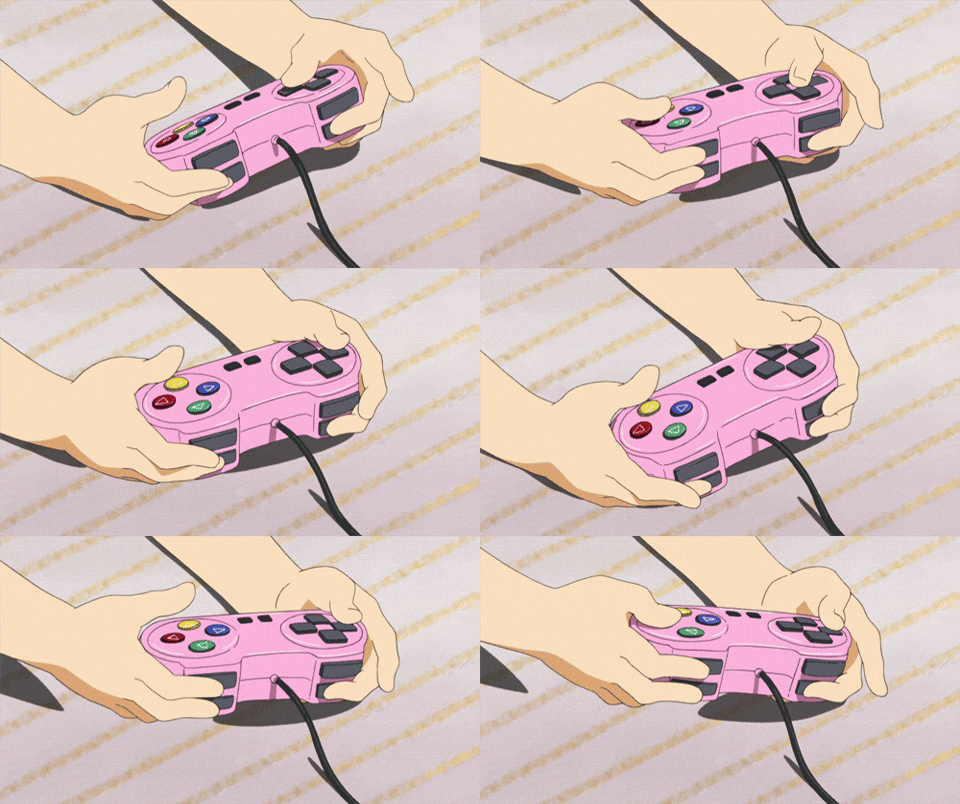
Median nerve compression from sustained non-neutral wrist posture and repetitive flexion/extension. Wrist pain reported in 36% of competitive esports athletes. Significantly higher risk with armrest absence and prolonged sessions.
👍 Gamer's Thumb (De Quervain's)
Tenosynovitis of the abductor pollicis longus and extensor pollicis brevis tendons from repetitive thumb movements on controllers and mobile devices. Particularly prevalent in mobile esports athletes.
💪 Lateral Epicondylitis (Mouse Elbow)
Repetitive strain of the common extensor origin from sustained mouse use and forearm pronation. Mirrors the presentation seen in factory workers performing repetitive upper-limb tasks at fixed workstations.
🦒 Nintendo Neck / Cervical Strain
Forward head posture sustained for hours multiplies cervical loading by up to 5×. Leads to cervical muscle fatigue, disc stress, cervicogenic headaches, and — in chronic cases — structural cervical changes.
🪑 Lumbar Disc Loading & Paraspinal Fatigue
Prolonged sitting in non-neutral lumbar posture increases posterior disc pressure and fatigues paraspinal stabilizers. PMC/NIH research confirms back pain is the second most-reported complaint after eye fatigue in esports athletes.
⚡ Ulnar Neuropathy (Gamer's Elbow)
Ulnar nerve compression at the cubital tunnel from sustained elbow flexion against a hard surface (desk or armrest). Produces numbness and tingling in the ring and little fingers, a presentation increasingly documented in esports athletes.
The Throne That's Destroying Your Kingdom
We need to talk about the gaming chair. Specifically, about the gap between what it is marketed as an ergonomic, performance-enhancing, professional-grade athletic seat. What the research suggests it actually provides: a deeply uncomfortable, spinal-curve-flattening, bucket-shaped experience that would concern most ergonomists.
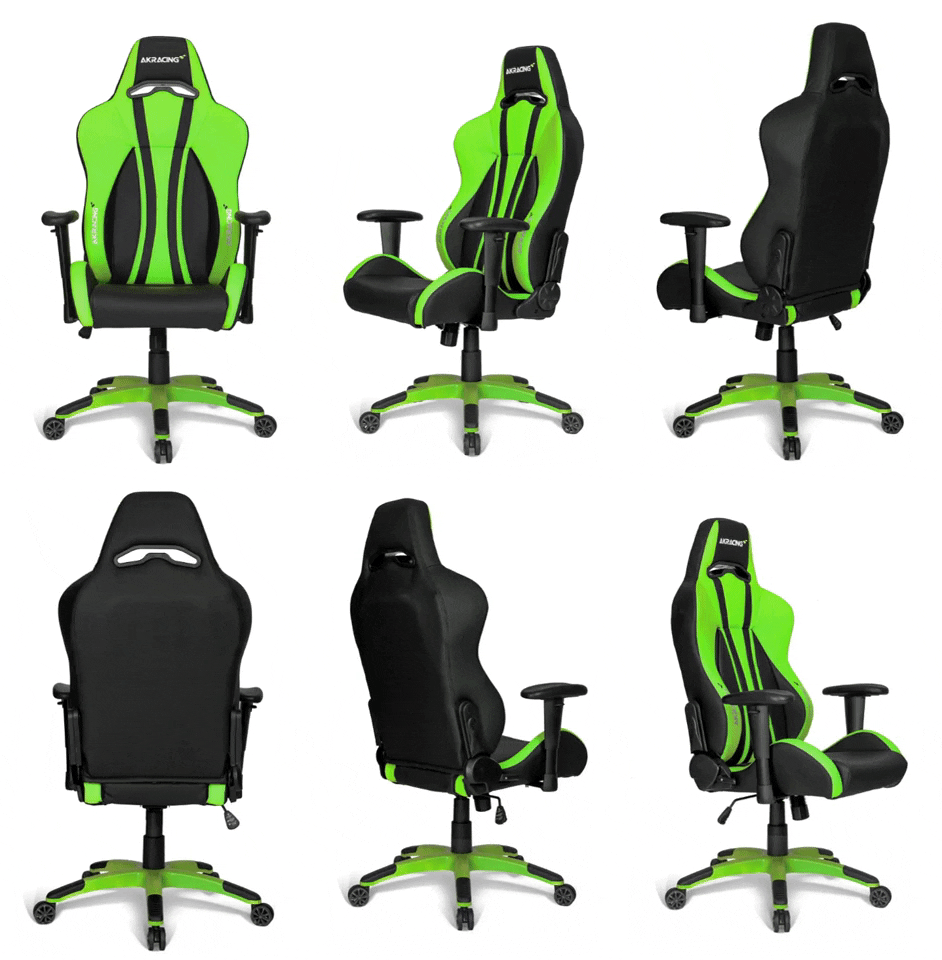
The classic gaming chair design borrows its aesthetic entirely from motorsport racing seats. This makes a great deal of sense in a Formula 1 car, where the driver needs to be restrained against multi-G cornering forces and is essentially strapped into a safety device. It makes considerably less sense for someone who is stationary, will remain stationary for 8 hours, and whose primary physical demand is moving a mouse approximately six inches to the left.
"Aberrant sitting posture, repetitive movements, screen vision, prolonged playing hours, and a sedentary lifestyle can lead to several medical hazards in musculoskeletal, ophthalmological, neurological, and metabolic systems."
Research published in PMC/NIH on esports medicine describes the typical gaming posture as involving prolonged forward head posture, rounded shoulders, and chest compression that creates a posterior pelvic tilt, flattening the lumbar lordosis and shifting the entire spinal load onto the posterior disc margins and facet joints. The racing-bucket design of most gaming chairs actively encourages this posture by providing high, winged side bolsters that cup the torso in a rounded, kyphotic position. This is, ergonomically, nearly the opposite of what is needed.
💡 What does evidence-based seating actually need? According to PMC/NIH ergonomics research on esports, effective seated gaming setups require: lumbar support that maintains natural lordosis, armrests at keyboard height to offload the shoulder girdle, monitor positioning at eye level to reduce cervical flexion, and screen distance sufficient to avoid forward head migration. Most gaming chairs provide aggressive lumbar curvature in the wrong location, armrests that are too high and too far from the body, and do nothing to address monitor height. The aesthetic is elite. The ergonomics are optional.
🏎️ For clarity: racing drivers do not develop forward head posture from their seats because they are reclined, helmeted, and being flung around a track at 200 mph, a set of conditions that provides continuous vestibular stimulation and postural variation. Esports athletes are not being flung anywhere. They are very, very still. The chair was designed for one context and repurposed for the precise opposite context. The results are exactly what you'd expect.
What Chiropractors Can Do And What Gamers Need to Hear
The good news (and there is good news) is that E-Sports injuries are largely preventable and highly responsive to early intervention. The challenge is getting athletes to seek care before a manageable overuse injury becomes a career-limiting one. A 2025 PubMed review found that only 2% of injured E-Sports athletes seek medical attention. The reasons are predictable: many don't recognize gaming as a sport that can produce injury, the culture does not yet normalize sports medicine support, and the "push through it" mentality familiar from traditional sports is very much present.
An AOASM position statement published in PMC/NIH identified that esports requires a multidisciplinary care team — addressing ophthalmologic, musculoskeletal, metabolic, and mental health dimensions simultaneously. Chiropractic care is uniquely positioned to address the musculoskeletal component, with particular relevance to cervical and lumbar posture correction, joint mobilization, and ergonomic rehabilitation.
Cervical Spine Mobilization and Adjustment
Chiropractic cervical mobilization targets the joint restriction and muscular imbalance created by sustained forward head posture. PMC/NIH research confirms that FHP creates compressive loading at posterior facet joints and stretching of anterior cervical structures — a pattern that responds well to segmental mobilization, particularly at C1–C2 and C5–C7 where gaming-associated restriction commonly accumulates. Combining adjustment with postural re-education (chin tucks, deep cervical flexor activation) is the evidence-based approach for sustainable improvement.
Thoracic Spine Extension Mobilization
Chiropractic cervical mobilization targets the joint restriction and muscular imbalance created by sustained forward head posture. PMC/NIH research confirms that FHP creates compressive loading at posterior facet joints and stretching of anterior cervical structures — a pattern that responds well to segmental mobilization, particularly at C1–C2 and C5–C7 where gaming-associated restriction commonly accumulates. Combining adjustment with postural re-education (chin tucks, deep cervical flexor activation) is the evidence-based approach for sustainable improvement.
Cervical Deep Flexor Strengthening
Forward head posture is not just a mobility problem — it is a motor control problem. The deep cervical flexors (longus colli, longus capitis) become inhibited and lengthened while the superficial extensors (upper trapezius, suboccipitals) become overactive and shortened. Chin tuck exercises performed in supine, seated, and standing positions progressively retrain deep flexor activation and restore cervical alignment. This exercise is simple, requires no equipment, and has strong evidence for reducing cervicogenic pain — making it an ideal home exercise for esports athletes between sessions.
Wrist and Forearm Strengthening
PubMed research confirms that esports athletes rarely warm up before gaming sessions, contributing to the high burden of acute-onset upper-limb injury. A structured pre-session protocol of wrist flexor and extensor stretching, forearm pronation/supination, and finger tendon gliding exercises reduces repetitive strain accumulation. Post-session ice and gentle nerve gliding (median and ulnar nerve) can further reduce neurogenic sensitization. AOASM guidelines recommend that esports healthcare providers implement individualized upper-extremity programs that include both prehabilitation stretching and strengthening of the intrinsic hand muscles.
Scapular Strengthening: Rows, Face Pulls, and Band Work
The rounded-shoulder posture of gaming weakens the lower trapezius, rhomboids, and serratus anterior — the muscles responsible for maintaining proper scapular positioning. Resistance band rows, face pulls, prone Y's and T's, and wall slides directly strengthen these muscles and counteract the anterior dominance created by prolonged forward-arm gaming posture. Research on overhead athletes and office workers with similar postural presentations consistently supports scapular strengthening as a cornerstone of both treatment and prevention — and the esports athlete is both simultaneously.
The 20-20-20 Rule
AOASM and PMC/NIH-sourced esports medicine guidelines recommend the 20-20-20 rule as a minimum break protocol: every 20 minutes, look at something 20 feet away for 20 seconds to reduce eye fatigue (the number-one complaint in professional esports). Chiropractors should extend this to a movement prescription: every 20–30 minutes, stand, perform 5 chin tucks, 5 shoulder blade squeezes, and 10 wrist circles before returning to play. Brief interruptions to sustained static posture are among the most effective and practical interventions available — and they cost exactly nothing in terms of equipment or time.
Ergonomic Set-Up Assessment
The single highest-yield intervention in esports injury prevention may be a proper ergonomic setup assessment — something that requires no equipment, can be conducted via telehealth, and immediately addresses root causes rather than symptoms. Key points per PMC/NIH ergonomics research: monitor top edge at or just below eye level; elbows at 90–100° with forearms parallel to the floor; keyboard and mouse at elbow height or slightly lower; lumbar support placed to maintain natural lordosis; chair height allowing feet flat on the floor. Most gaming setups violate at least three of these criteria simultaneously. Correcting them is not glamorous, but it is extraordinarily effective.
"E-Sports injuries are not a 'gamer problem.' They are a sports medicine problem; with a young, motivated, and largely unserved patient population that is just waiting for someone to take them seriously."
The emerging field of esports medicine is moving quickly. University programs are embedding athletic trainers and chiropractors into esports team structures. The AOASM has issued formal position statements. PubMed now contains hundreds of peer-reviewed studies that didn't exist a decade ago. The infrastructure for supporting esports athletes' physical health is being built in real time, and chiropractors — with their expertise in spinal mechanics, posture, and repetitive strain are among the most naturally suited practitioners to lead it.
In the meantime, the message to any gamer reading this is straightforward: your body is not optional equipment. You can optimize your mouse sensitivity, your monitor refresh rate, and your headset latency down to microseconds and then spend eight hours destroying your cervical spine by leaning two inches toward the screen. The controller deserves better peripherals than that. So does your spine.
⚠️Medical Disclaimer: This article is for educational and informational purposes only. It does not constitute medical advice and is not a substitute for evaluation and treatment by a licensed healthcare professional. If you are experiencing pain, numbness, or musculoskeletal symptoms, please consult a qualified chiropractor, physical therapist, or sports medicine physician.
References & Sources
Lam WK, et al. Spine Posture, Mobility, and Stability of Top Mobile Esports Athletes: A Case Series. PMC/NIH 2022. PMID: 35625465. PMC/NIH ↗
Lam WK, et al. Health Risks and Musculoskeletal Problems of Elite Mobile Esports Players. Sports Med Open. 2022. PMID: 35553264. PMC/NIH ↗
DiFrancisco-Donoghue J, et al. Managing the health of the eSport athlete: An integrated health management model. BMJ Open Sport Exerc Med. 2019. PMC6350739. PMC/NIH ↗
Basuodan RM, et al. Prevalence and Awareness of Musculoskeletal Injuries Associated With Competitive Video Gaming in Saudi Arabia. PMC/NIH 2023. PMC10191805. PMC/NIH ↗
Korakakis V, et al. More Than a Game: Musculoskeletal Injuries and a Key Role for the Physical Therapist in Esports. J Orthop Sports Phys Ther. 2021;51(9):415–417. PMID: 34465141. PubMed ↗
Chandrasekaran S, et al. Analysis of Musculoskeletal Injuries Among Collegiate Varsity Electronic Sports Athletes. Cureus. 2022. PMC9749791. PMC/NIH ↗
Schmitt F, et al. Upper Limb Injuries in Esports and Videogaming — A Narrative Review. Int J Innov Tech Soc Sci. 2025. Journal ↗
Basuodan RM, et al. The impact of electronic gaming on upper-limb neuropathies among esports athletes. Med Pr Work Health Saf. 2023;74(4):279–287. PMID: 37966384. PubMed ↗
Hansraj KK. Assessment of stresses in the cervical spine caused by posture and position of the head. PubMed. PMID: 25393825. PubMed ↗
Orr R, et al. Plausible impact of forward head posture on upper cervical spine stability. PMC/NIH 2020. PMC7380784. PMC/NIH ↗
Salaheldien MA, et al. Effect of Forward Head Posture on Resting State Brain Function. PMC/NIH 2024. PMC11203370. PMC/NIH ↗
de Assis Cau BM, et al. Do Esports Players Experience Pain? Pain Prevalence: A Systematic Review and Meta-analysis. PMC/NIH 2025. PMC12764727. PMC/NIH ↗
Ketelhut S, Nigg CR. Heartbeats and high scores: esports triggers cardiovascular and autonomic stress response. Front Sports Act Living. 2024. PMC11024241. PMC/NIH ↗
Difiori JP, et al. AOASM Position Statement on Esports, Active Video Gaming, and the Role of the Sports Medicine Physician. PMC/NIH 2022. PMC9042337. PMC/NIH ↗
Villanueva MS, et al. The eSports Medicine: Pre-Participation Screening and Injuries Management. PMC/NIH 2023. PMC9966106. PMC/NIH ↗
Frontiers. Comparing health risks and musculoskeletal issues between professional and casual mobile esports players: Jakarta. PMC/NIH 2024. PMC11251960. PMC/NIH ↗