
The Dynamic Musculoskeletal Duo: How Chiropractic Care and Physical Therapy Are the Perfect Integrative Match
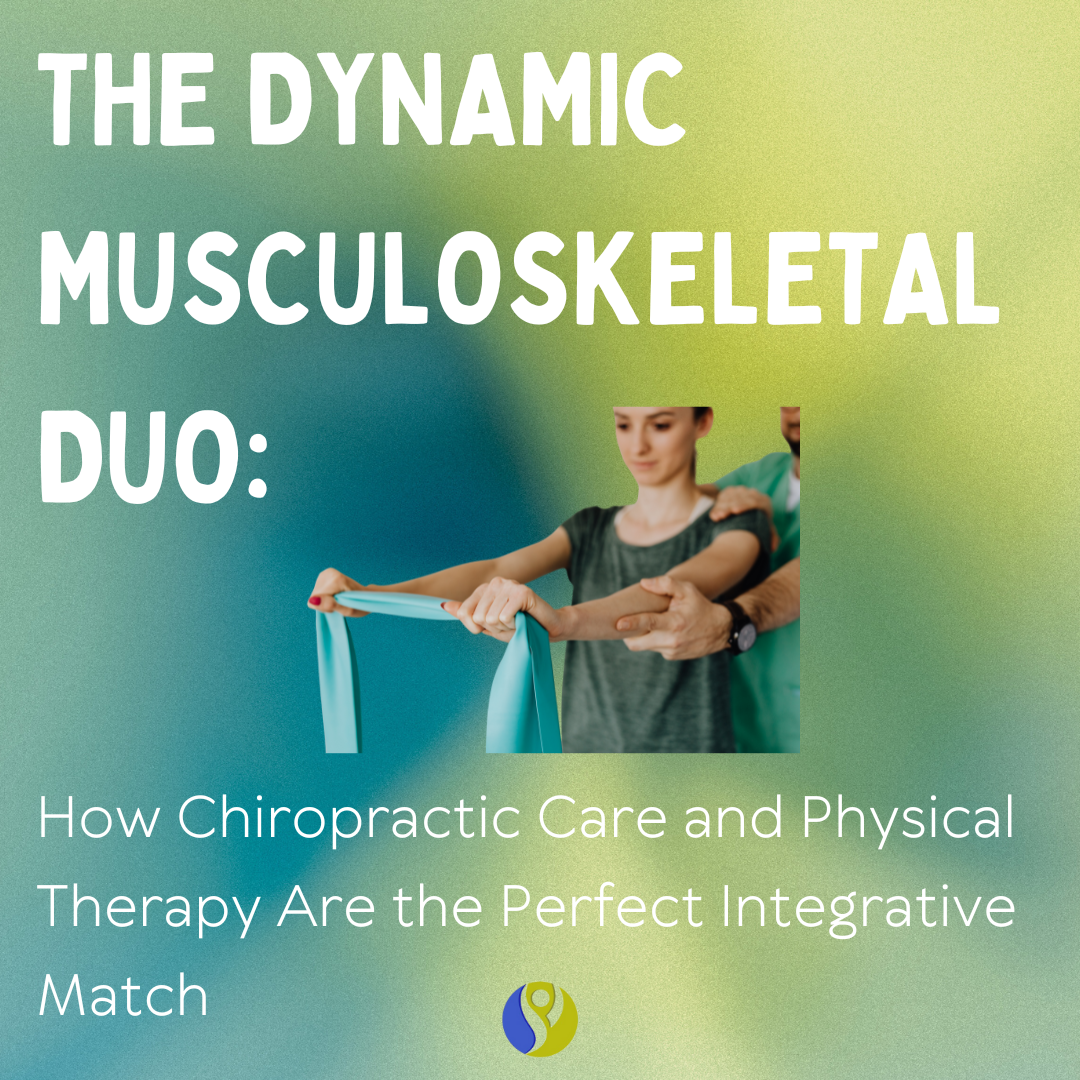
If you’ve ever pulled a muscle just thinking about exercise or felt your spine complain during a Netflix marathon, you’ve probably considered chiropractic care or physical therapy. Both are heavy hitters in the world of musculoskeletal health and sometimes are mistaken as rivals, but in truth, they’re more like peanut butter and jelly: different textures, same delicious mission.
What Is Chiropractic Care?
Chiropractic care focuses on improving joint mobility, reducing pain, and restoring function through manual adjustments, soft-tissue work, and movement-based strategies. Chiropractors often treat conditions involving the spine, joints, and nervous system.
According to the Mayo Clinic, spinal manipulation can help relieve low back pain and improve range of motion in joints that aren’t moving properly due to tissue injury or repetitive stress (Mayo Clinic, 2024).

What Is Physical Therapy?
Physical therapy (PT) helps people move better, recover from injuries, and prevent future problems through exercise, rehabilitation, and functional retraining. PTs assess movement, design individualized programs, and may also use manual therapy, balance work, and education.
As Johns Hopkins Medicine explains, physical therapy aims to “restore movement, relieve pain, and promote overall fitness and health” (Johns Hopkins Medicine, 2024).
How They’re Alike
Chiropractors and PTs both:
Help patients manage pain and improve function.
Use hands-on techniques and patient education.
Rely on evidence-based care that integrates the latest research and outcome measures.
In short: both professions are movement nerds dedicated to keeping your joints happy and your spine less dramatic.
How They Differ
Core Focus: Chiropractors emphasize spinal manipulation and alignment; PTs emphasize exercise progression and neuromuscular retraining.
Treatment Flow: Chiropractic visits often focus on manual adjustments for immediate relief. PT visits are typically longer-term, emphasizing functional recovery through movement and strengthening.
Education: Chiropractors specialize deeply in spinal biomechanics and manual therapy; PTs train extensively in rehabilitation science and movement analysis.
Different paths, same goal — to get you moving and keep you moving.
What the Evidence Says

Research supports both approaches for certain conditions, especially back and neck pain.
Spinal manipulation can provide short-term pain relief for acute and chronic low back pain (Paige et al., 2017; Vining et al., 2020).
Exercise therapy, a core PT intervention, improves mobility, reduces recurrence, and supports long-term recovery (NIH, 2023).
When manual therapy and exercise are combined, outcomes are often better than using either alone (Goertz et al., 2018).
In other words: teamwork makes the dream work — and the spine less cranky.

Integrative Care: When They Work Together
Chiropractic care can reduce acute pain and muscle tension, allowing patients to move more comfortably. That’s where physical therapy steps in — building strength, correcting movement patterns, and preventing reinjury.
An integrated model might look like this:
Chiropractor performs adjustments to restore mobility and reduce pain.
Physical therapist follows up with a structured movement plan to strengthen supporting muscles.
Patient gains confidence, movement, and fewer flare-ups.
The result? Less pain, fewer setbacks, and faster recovery — backed by research from multidisciplinary programs emphasizing collaboration and continuity of care (Green et al., 2022; Axén et al., 2020). Throw in a bit of acupuncture and you’ve got some real synergy happening.
The Bottom Line
Whether you’re dealing with chronic stiffness or recovering from a sprain, combining chiropractic care and physical therapy can help address both the cause and effect of pain.
So the next time your body starts acting like a diva, consider a duet: the chiropractor to get you moving, and the physical therapist to keep you moving.
⚖️ Disclaimer
The information in this article is for educational purposes only and is not intended as a substitute for professional medical advice, diagnosis, or treatment. Always consult a licensed healthcare provider regarding any medical condition or treatment decisions.
References
Axén, I., Bodin, L., Bergström, G., et al. (2020). The integration of chiropractic care into multidisciplinary spine care programs: A review of current evidence and models. Journal of Multidisciplinary Healthcare, 13, 1231–1242. https://doi.org/10.2147/JMDH.S259833
Goertz, C. M., Long, C. R., Vining, R. D., et al. (2018). Effect of usual medical care plus chiropractic care vs usual medical care alone on pain and disability among U.S. service members with low back pain. JAMA Network Open, 1(1), e180105. https://doi.org/10.1001/jamanetworkopen.2018.0105
Johns Hopkins Medicine. (2024). Physical therapy and rehabilitation. https://www.hopkinsmedicine.org/health/treatment-tests-and-therapies/physical-therapy
Mayo Clinic. (2024). Chiropractic adjustment: What you can expect. https://www.mayoclinic.org/tests-procedures/chiropractic-adjustment
National Institutes of Health (NIH). (2023). Exercise and back pain: What the evidence says. https://www.nccih.nih.gov
Paige, N. M., Miake-Lye, I. M., Booth, M. S., et al. (2017). Association of spinal manipulative therapy with clinical benefit and harm for acute low back pain: Systematic review and meta-analysis. JAMA, 317(14), 1451–1460. https://doi.org/10.1001/jama.2017.3086
Vining, R. D., Long, C. R., et al. (2020). Chiropractic manipulative therapy for spine pain in active-duty military personnel: A pragmatic trial. Pain Medicine, 21(11), 3307–3316. https://doi.org/10.1093/pm/pnaa266
Green, B. N., Johnson, C. D., & Lisi, A. J. (2022). Collaborative models for chiropractic and physical therapy integration in musculoskeletal care. BMC Health Services Research, 22, 476. https://doi.org/10.1186/s12913-022-07899-2