
Cold, Flu, and COVID Season: How Not to Spend Winter Hugging Your Tissue Box (…and How Chiropractic Care Fits In)
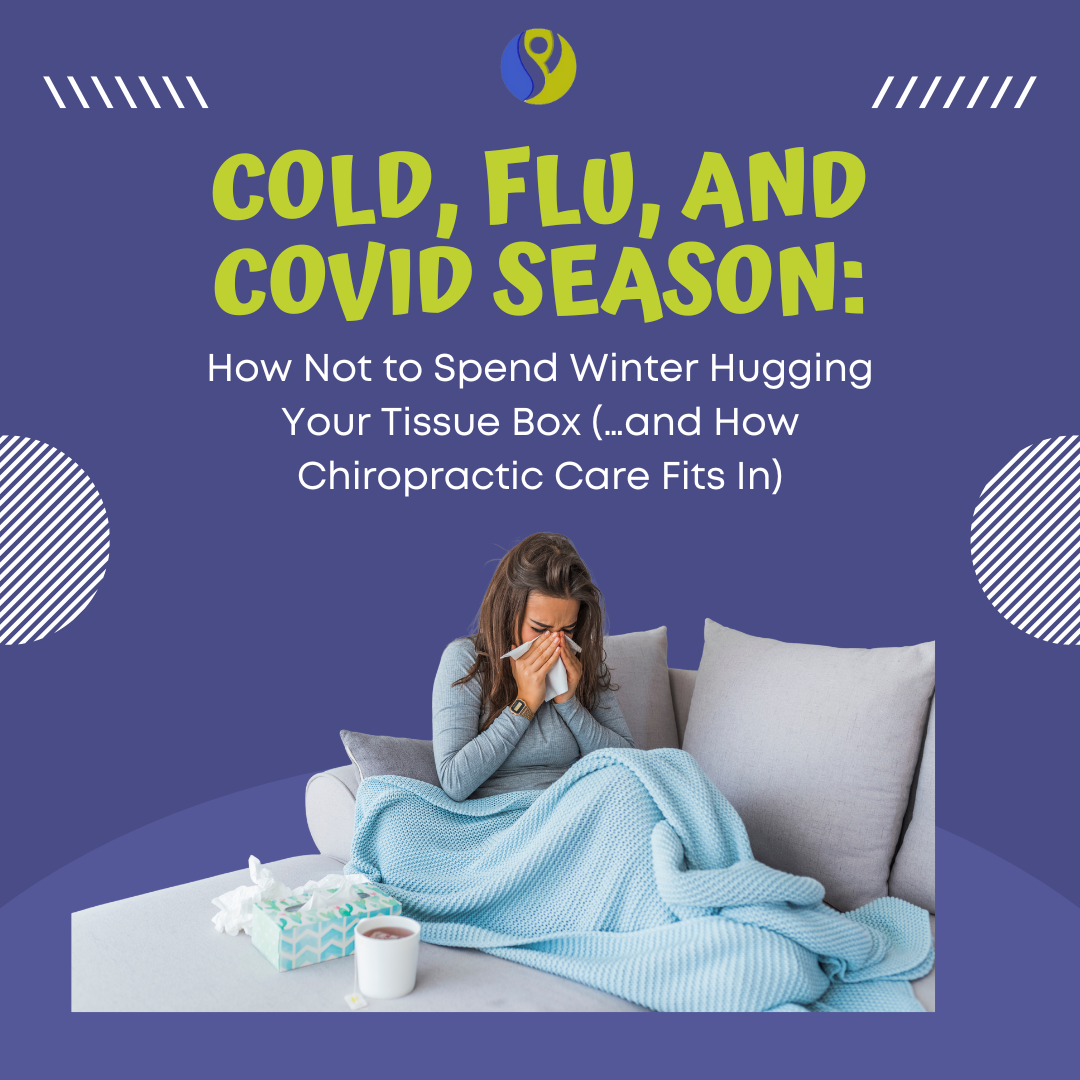
Every fall and winter, respiratory viruses return like they’re attending a yearly reunion in your sinuses.
The cold shows up first, humming to itself and being mildly annoying.
The flu arrives later like it’s been cast in a dramatic soap opera.
Then COVID wanders in carrying popcorn and a personality, refusing to leave even when you politely suggest it should.
But you don’t have to spend the season playing “Guess if this is allergies or the apocalypse.”
There are evidence-based ways to reduce your risk of getting sick, and while chiropractic care is not a treatment for viral infections, it can support your overall health in ways that matter especially when the viruses start acting like they own the place.
Let’s break it down.

What Are We Up Against?
The Common Cold
Usually caused by rhinoviruses. Rhinoviruses are tiny, annoying little particles that somehow cause disproportionate suffering.
Typical symptoms:
runny or stuffy nose
sneezing
mild cough
sore throat
“why am I tired but also not sick enough to justify staying in bed?”
Influenza (The Flu)
The flu is cold’s dramatic cousin who shows up yelling, knocking over furniture, and vomiting emotional intensity everywhere.
Symptoms can include:
fever
body aches
chills
deep fatigue
cough
headaches
COVID-19
Caused by SARS-CoV-2 and...complicated.
Symptoms can be mild or very serious:
fever / chills
cough
loss of taste/smell
sore throat
fatigue
congestion
shortness of breath
body aches
headaches
COVID is the unpredictable relative: sometimes it behaves, sometimes you wish it would leave.

How These Viruses Spread
All three primarily spread through:
respiratory droplets
close contact
poor ventilation
touching contaminated surfaces (less common but possible)
Translation: holiday gatherings, offices, schools, airplanes… basically anywhere people exist in proximity to other people.
How to Prevent the Sickness
These strategies come straight from the CDC, NIH, Johns Hopkins, Mayo Clinic, and decades of immunology research:
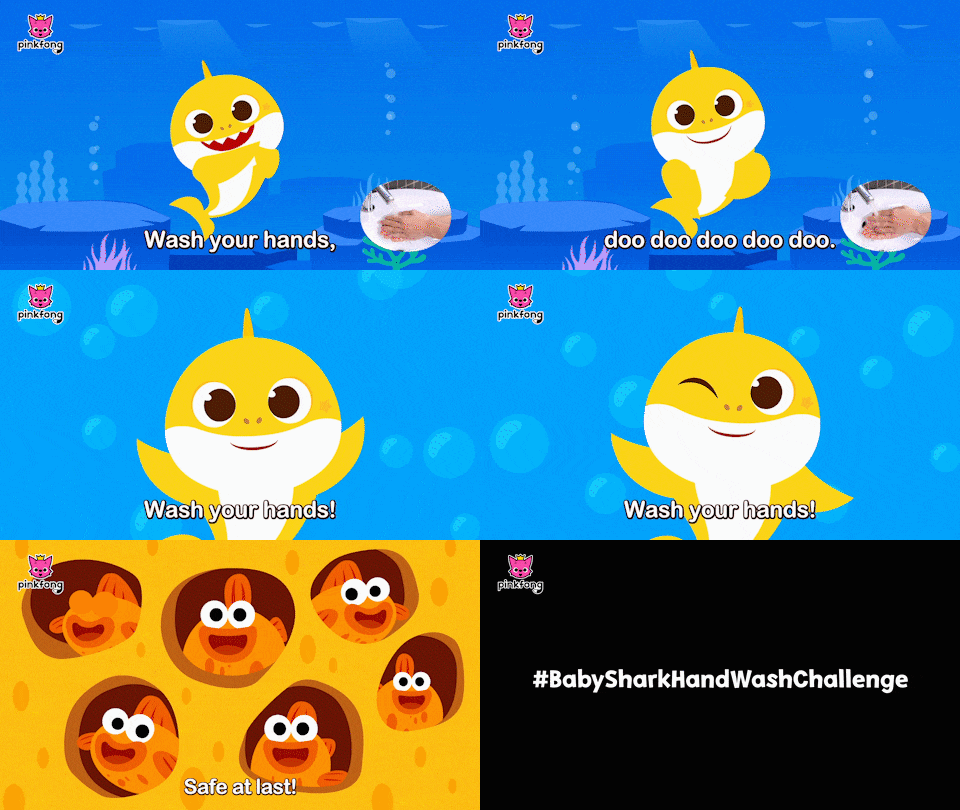
Your Parents Were Right: Wash Your Hands
Handwashing reduces respiratory infections (AI & colleagues, 2008).
Soap destroys the lipid envelope on viruses and turns them into sad, harmless goo.
Stop Touching Your Face
Humans touch their faces about 20 times per hour.
Every touch is like mailing an engraved invitation to pathogens:
“Please come infect me at your earliest convenience!”
Improve Indoor Air
Good ventilation can significantly reduce viral spread, especially for COVID and influenza.
Open windows. Use HEPA filters. Don’t suffocate yourself in a conference room for eight hours.
Sleep Like Your Immune System Depends On It (Because It Does)
People who sleep less than 7 hours are dramatically more likely to get sick when exposed to viruses (Cohen, JAMA IM, 2015).
Sleep is basically immune system fertilizer.
Eat REAL Food..Not Trash
We aren’t trash pandas; your immune system needs real foods containing:
vitamin C
vitamin D
zinc
antioxidants
protein
whole foods
No, there is no miracle superfood, but malnutrition absolutely weakens immune responses.
Hydrate
You want healthy mucous membranes; this is your first line of defense against infection.
Manage Stress
Chronic stress dysregulates immune function (Segerstrom & Miller, 2004).
Deep breathing, movement, laughter, and sometimes just saying “no” to things matter.
Keep Up to Date on Vaccines: What They Actually Do (and What They Don’t Do)
This is where people get confused, so let’s clear it up.
What a Vaccine Actually Is
A vaccine teaches your immune system how to recognize a pathogen without giving you the disease.
Vaccines can be:
Inactivated (killed) virus
Protein subunit
mRNA (COVID vaccines)
Weakened virus (some nasal flu vaccines)
In NONE of these are fully capable, replicating pathogens able to cause the disease in a healthy person.
Why You Can’t Get the Flu from the Flu Shot
The standard flu shot uses either:
killed virus
or viral protein
Dead viruses cannot reproduce.
So, if someone gets “the flu” after the shot it’s usually because:
They were already incubating it
They caught a different virus
They’re experiencing immune activation (which can feel like mild flu)
Immune activation ≠ being sick.
Why COVID Vaccines Can’t Give You COVID
mRNA vaccines:
do not contain SARS-CoV-2
cannot create a whole virus
cannot alter DNA
only cause your cells to display a harmless piece of protein
Your immune system sees it, learns it, stores it so it can fight the virus when it shows up. That’s it.
So Why Do Some People Get COVID After Vaccination?
Vaccines are not always sterilizing. Instead, they:
significantly reduce infection risk
dramatically reduce severity
reduce hospitalization
reduce long COVID
reduce death
Even when breakthrough infections happen, vaccinated people generally have safer, milder outcomes.
Think of it like a wanted poster:
Unprepared immune system = police spotting the criminal after a long chase
Vaccinated immune system = police recognizing them immediately and ending the chaos
So… What About Chiropractic Care?
Let’s be very clear and evidence-based:
Chiropractic care does not treat or cure viral infections.
However, chiropractic care can support health in ways that matter when your immune system is fighting for its life.
Here’s how:
Better Sleep
Pain (neck, back, headaches) disrupts sleep.
Sleep = immune function.
Chiropractic care helps with removing/reducing pain and may help you sleep better → which helps your immune system function better.
Reduced Stress
Manual therapy has been shown to modulate autonomic nervous system responses and reduce stress physiology (Vernon, 1999).
Lower stress = better immune regulation.
Improved Mobility
Thoracic spine and rib mobility influence:
breathing mechanics
posture
movement
lymphatic flow
All support efficient physiology.
Encouragement of Healthy Habits
Chiropractors also:
coach on movement
coach on stretching
address posture
advise on ergonomics
help restore activity
help people feel better in their bodies
When people feel better, they exercise more, sleep better, and cope better.
These all influence immune health.
Support During Recovery
After illness people often have:
muscle tightness
rib discomfort
neck tension
postural strain
deconditioning
Chiropractic care may help restore comfort and function once the acute illness has resolved.
The Real Takeaway
You can’t avoid every virus (unless you plan to live in a hazmat bubble, which is… a choice).
But you can:
wash hands
sleep
eat well
manage stress
get vaccinated
improve ventilation
stay active
use chiropractic care as supportive, integrative health care
Do all of those and winter becomes significantly less “crying under a blanket” and more “I have this under control.”
Disclaimer: The information provided in this article is for educational and informational purposes only and is not intended as medical advice, diagnosis, or treatment. The content does not create a doctor–patient relationship, and readers should not rely on it as a substitute for personalized medical advice from a qualified healthcare professional. Always consult with your healthcare provider regarding any health concerns or before beginning any new treatment.
References:
Respiratory Illness Basics
Centers for Disease Control and Prevention. Influenza (Flu).
Centers for Disease Control and Prevention. COVID-19: How it Spreads.
National Institutes of Health. Common Cold (Rhinovirus) Research Summaries.
Johns Hopkins Medicine. Coronavirus Disease (COVID-19) Overview.
Mayo Clinic. COVID-19 Symptoms & Prevention.
Prevention & Immune Function
6. Cohen S, et al. Sleep habits and susceptibility to the common cold. JAMA Internal Medicine. 2015.
7. Aiello AE, et al. Hand hygiene and respiratory illness. American Journal of Public Health. 2008.
8. Moriyama M, et al. Seasonality of respiratory infections. Annual Review of Virology. 2020.
9. Segerstrom SC, Miller GE. Stress and immune function: meta-analysis. Psychological Bulletin. 2004.
Chiropractic & Manual Therapy Research
10. Bronfort G, et al. Efficacy of spinal manipulation: systematic review. Spine Journal. 2004.
11. Vernon H. Spinal manipulation and neurophysiology: review. J Electromyogr Kinesiol. 1999.
12. Peterson CK, et al. Spinal manipulation and immune markers: exploratory study. Chiropractic & Manual Therapies. 2021.