
Surviving Comic-Con: How to Prep Your Body For all the Cosplay Chaos
San Diego Comic-Con is a four-day athletic event disguised as a pop culture celebration. Your spine deserves to know what it signed up for.
Every July, roughly 135,000 people descend on the San Diego Convention Center for Comic-Con International. They come for panels, exclusives, celebrity sightings, and the singular experience of waiting in a line for four hours to get into a room to wait in another line. It is, by every objective measure, a marvel of human enthusiasm. It is also, from a musculoskeletal standpoint, a four-day endurance event that most attendees are spectacularly unprepared for.
We see the aftermath every year. People who have never walked more than a mile in a single day somehow cover eight to twelve miles of convention floor per day in costume shoes not designed for the purpose. Others stand in Hall H lines starting at 4am on concrete with no lumbar support and the posture of a question mark. Some carry elaborate props that weigh more than a reasonable carry-on. Their spines, to put it medically, have thoughts.
What Prolonged Standing and Walking Actually Does to Your Body
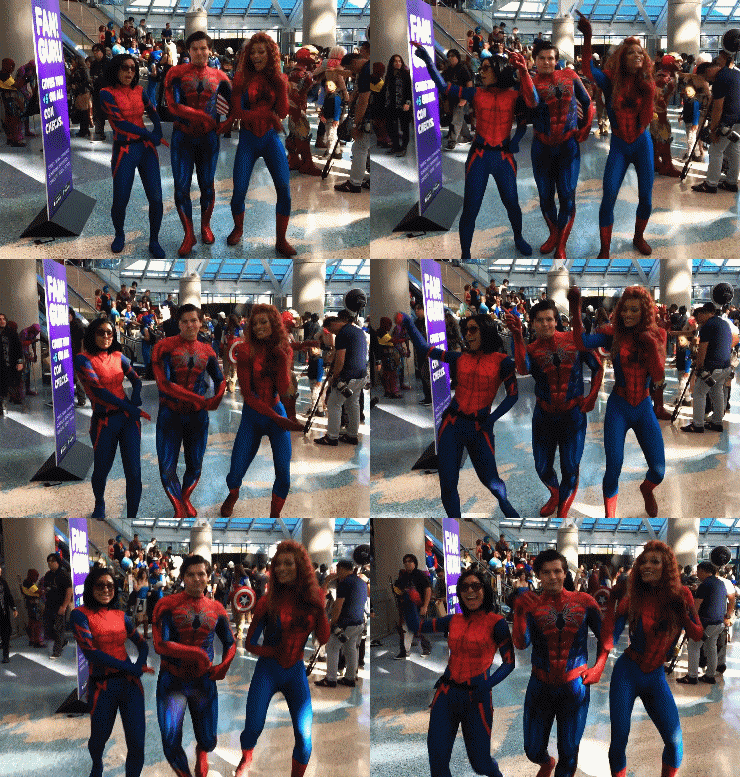
Research published in PubMed found that prolonged walking consistently produces significant increases in subjective musculoskeletal discomfort — particularly in the lower back and lower legs — and that muscle oxygenation patterns in the erector spinae change measurably over a two-hour walking period.[1] Comic-Con involves not two hours of walking, but four to six, with minimal recovery between days. That is a physiological event.
Prolonged standing is, if anything, worse than walking for the lumbar spine. A PubMed study found that 43.75% of participants developed low back pain after just two hours of standing, and that people who moved the least — taking fewer small weight shifts and fidgets — were the most likely to develop pain.[2] The Hall H line, where attendees stand largely immobile on concrete for hours, is essentially a controlled experiment in spinal loading. The results are predictable.
"Prolonged standing with minimal movement is associated with low back pain in nearly half of participants, with lack of lumbar spine movement identified as the primary predisposing factor."[2]
The Cosplay Biomechanics Catastrophe
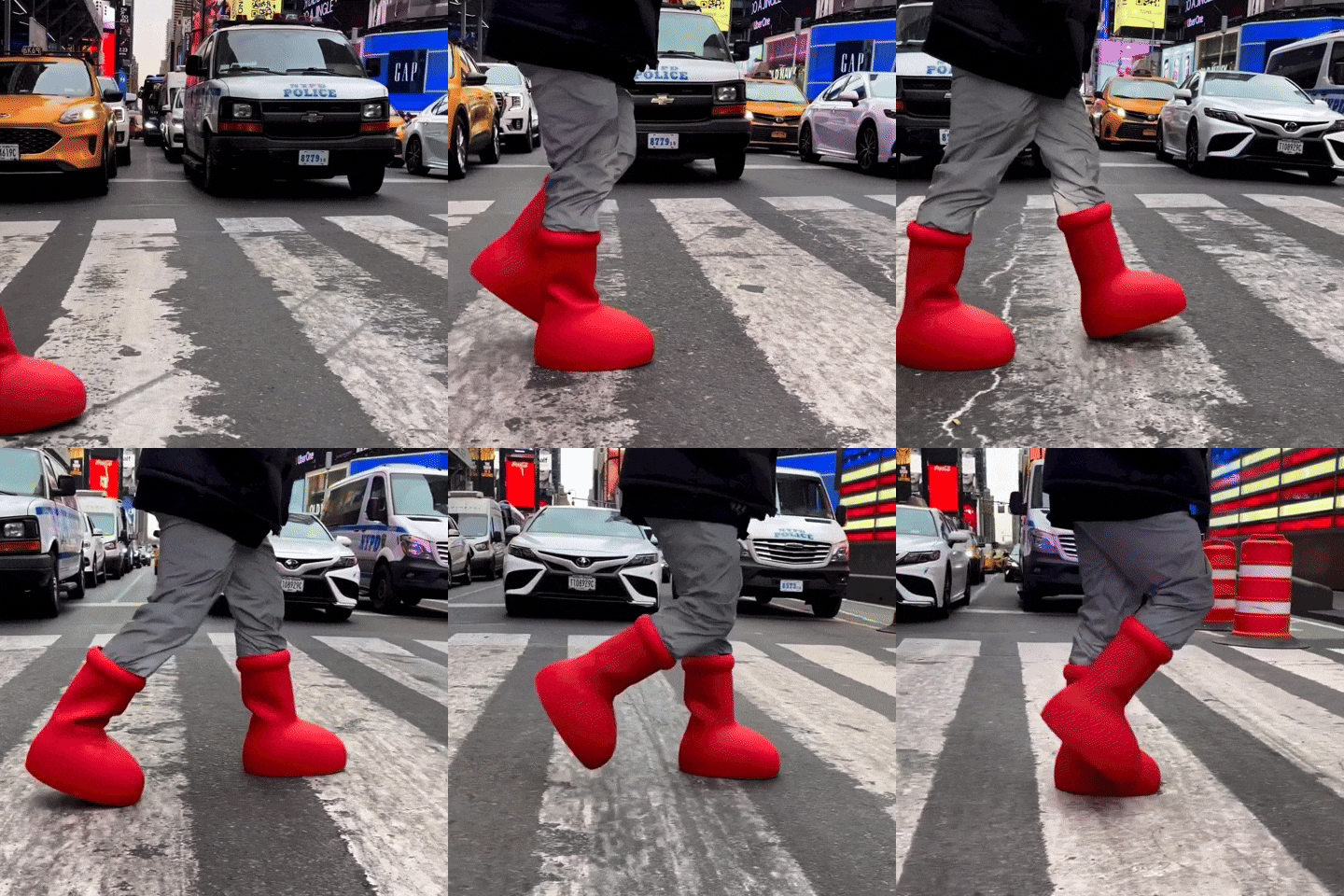
Let's talk about footwear. Costumes are a joyful and creative expression of fandom, and we would never suggest that anyone abandon their commitment to accuracy. We would, however, gently note that platform boots, stilettos, flat-soled character shoes, and foam armor encasing the knee joint were not designed by ergonomists. A 2020 PubMed study found that prolonged standing on hard floors produces measurable changes in foot pain-pressure thresholds over the course of a single work day — a finding that applies with even greater force when your footwear is a pair of latex boots and your floor is convention center concrete.[3]
The heavy prop situation is a separate chapter. Carrying asymmetric loads — a large prop held in one hand, a bag over one shoulder, a body-worn armor piece that shifts the center of gravity — alters spinal loading in ways that accumulate across a four-day event. This is, coincidentally, why chiropractors exist.
How to Actually Survive Comic-Con with Your Spine Intact
The evidence is clear that movement — even small, frequent position changes — dramatically reduces the musculoskeletal impact of prolonged standing.[2] This means that every 20–30 minutes in a line, shift your weight, take a few steps, roll your shoulders, and perform some gentle lumbar extension. You will look slightly odd doing this while dressed as a Mandalorian. You will feel significantly better on day four.
Footwear is the single most impactful equipment decision you will make. Supportive insoles inside costume footwear, or the strategic use of a "travel costume" with comfortable shoes and the "photo costume" with the glamorous but brutal footwear, represent the kind of tactical planning that Comic-Con attendees — who have carefully optimized every other aspect of their convention experience — are well positioned to execute.
Your Comic-Con spine survival checklist
Walk and shift weight every 20–30 minutes during line waits — movement is the antidote to prolonged standing pain[2]
Invest in quality insoles for costume footwear — concrete is unforgiving across four days[3]
Carry bags and props symmetrically where possible, or alternate sides every 30 minutes
Bring a small foldable seat or sit-pad for Hall H — your lumbar spine will send a formal thank-you
Schedule a chiropractic adjustment in the week before and after the convention — consider it part of your con budget
Stretch your hip flexors, hamstrings, and calves each evening — what happens at Comic-Con does not stay at Comic-Con; it follows you home as soreness
The convention will be spectacular. Your panels will be packed, your exclusives secured, your photo ops memorable. With a little planning, your back will be there for all of it — and for the drive home, and the Monday after, and the next year's badge lottery. See you on the floor.
References
Cham R, Redfern MS. Effect of prolonged walking with intermittent standing on erector spinae and soleus muscle oxygenation and discomfort. Hum Factors. 2019. PubMed
Gallagher KM, Callaghan JP. Early static standing is associated with prolonged standing-induced low back pain. Hum Factors. 2015. PubMed
Madeleine P, et al. Standing and very slow walking: foot pain-pressure threshold, subjective pain experience and work activity. Eur J Appl Physiol. 2001. PubMed