
Chiropractic care for cyclists: keeping the Bayshore Bikeway crowd pain-free
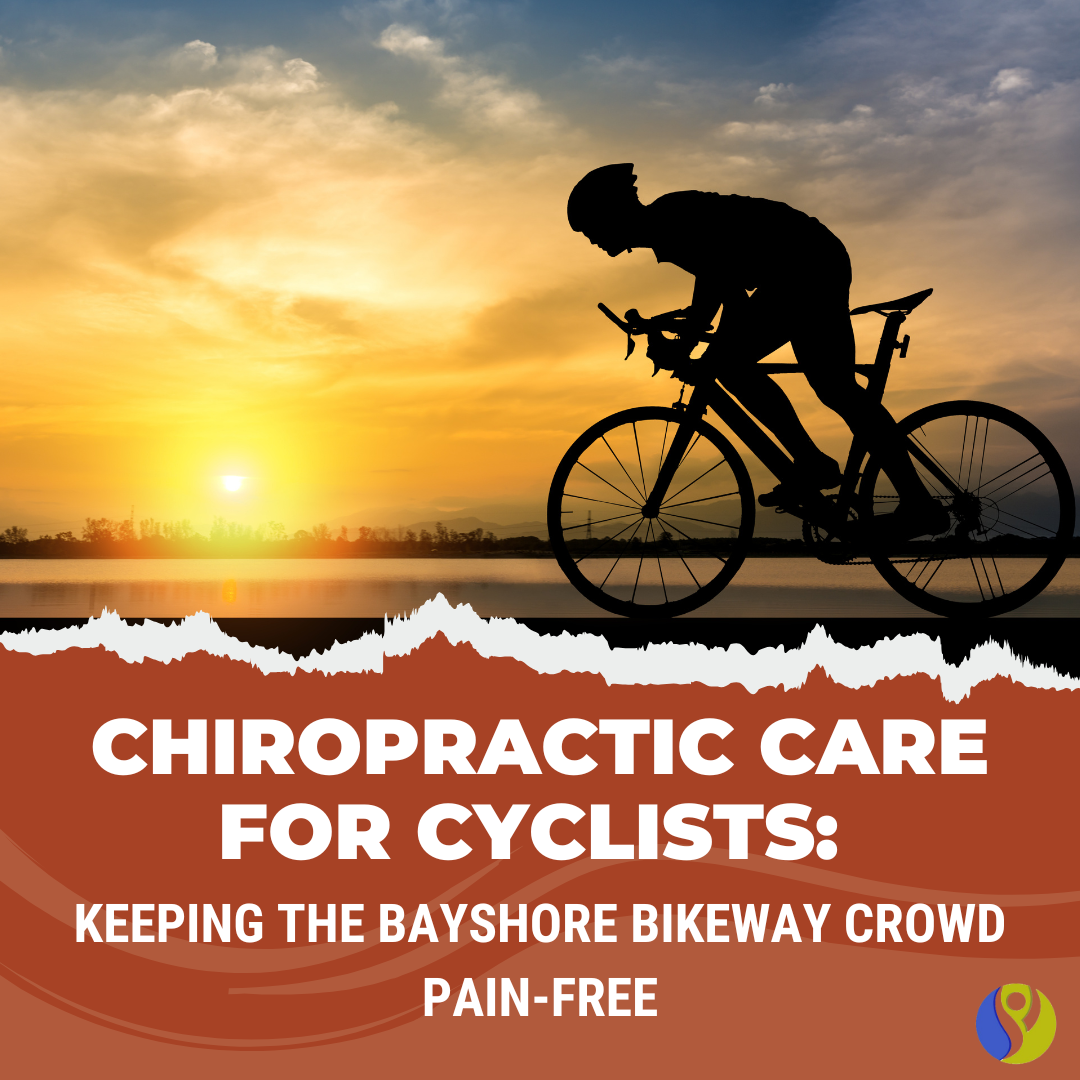
San Diego's cycling scene is spectacular — and spectacularly good at producing neck, back, and knee pain. Here's what the research says about why, and what to do about it.
San Diego might be the most cycling-friendly major city in the United States. The Bayshore Bikeway, the Rose Canyon path, the Velodrome at Balboa Park, Fiesta Island, the coastline — on any given morning, the bike lanes are genuinely busy with commuters, recreational riders, and people who have clearly invested a concerning amount of money in carbon fiber. It's a wonderful thing. It also produces a very reliable stream of cyclists sitting in our office holding their lower backs and looking mildly betrayed by the sport they love.
Cycling is often recommended as a low-impact alternative to running for people with joint pain — and it is, for the hips and knees, most of the time. What it is decidedly not low-impact on is the lumbar spine, the cervical spine, and the soft tissues that spend hours in a sustained, loaded flexion position while your legs go around in circles 90 times a minute. The good news is that most cycling-related pain is predictable, addressable, and often preventable. Let's get into it.
The cycling posture problem, explained without jargon
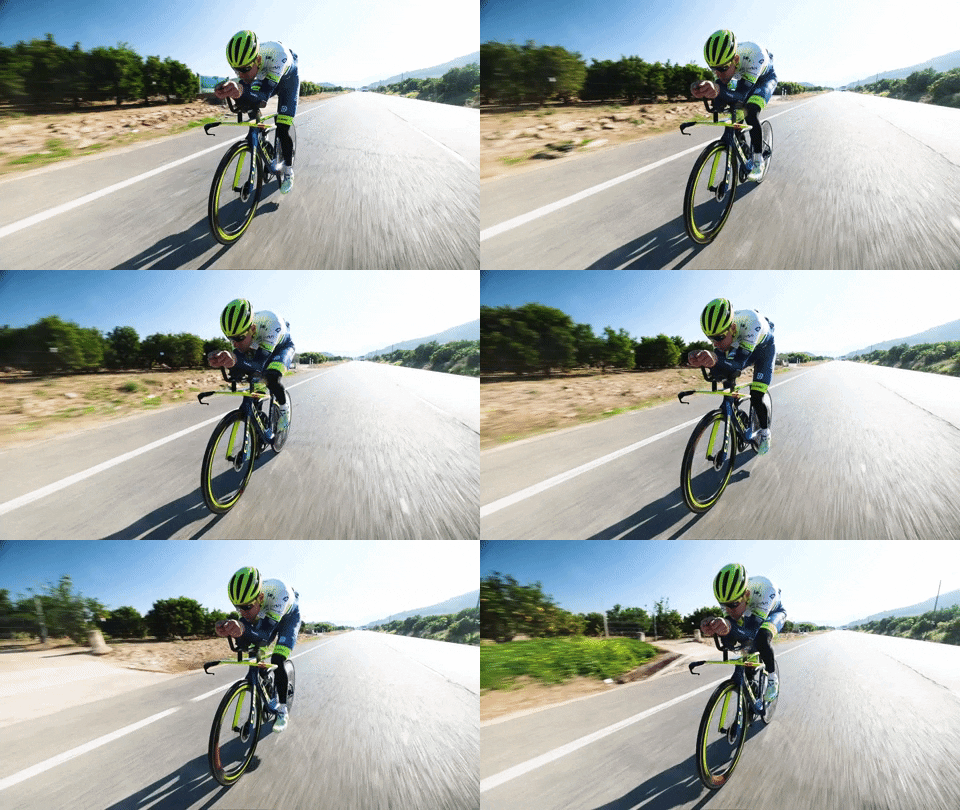
When you ride a road bike, you are spending somewhere between 30 minutes and six hours in a forward-flexed, sustained spinal posture that no human being in the history of pre-industrial civilization ever held voluntarily. Your lumbar spine is flexed. Your thoracic spine is flexed. Your neck is extended to compensate so you can see where you're going. Your hip flexors are in a shortened position. Your glutes, which are supposed to be key stabilizers of the pelvis and lumbar spine, are largely not doing their job because the saddle has relieved them of the burden.
A systematic review published in Sports Biomechanics (PubMed, 2023) found that cycling consistently alters spinal curvature, with road cyclists in particular showing increased thoracic kyphosis and reduced lumbar lordosis during riding — a pattern that, over time and sufficient volume, begins to influence spinal posture off the bike as well.[1]
"Neck and back pain are among the most common overuse injuries in cyclists. Bicycle fit, improper equipment, training errors, and individual anatomic factors are important evaluation considerations."[2]
That quote is from a PubMed-indexed review that has been cited in the sports medicine literature for over two decades — and it remains accurate. The mechanism hasn't changed; only the bikes have gotten more aerodynamic and the saddle heights more precisely dialed in by people who own laser levels.
The most common injuries we see in cyclists — and why they happen
Most common: Low back pain
Reported by more than half of all cyclists. Linked to prolonged lumbar flexion, core muscle imbalances, and loss of lumbar multifidus co-contraction.
Very common: Neck pain
Sustained cervical extension to compensate for trunk flexion loads the posterior cervical joints and muscles across every mile ridden.
Common: Catellofemoral pain
"Cyclist's knee." Most often caused by a saddle positioned too low, increasing compressive force on the kneecap with every pedal stroke.
Common: IT band syndrome
Lateral knee pain from repetitive friction of the iliotibial band. Often linked to a saddle positioned too high or poorly aligned cleats.
Low back pain deserves particular attention because the research on its mechanism in cyclists is quite specific. A PubMed study using an electromagnetic tracking system found that cyclists with low back pain showed significantly more lower lumbar flexion and rotation during riding than pain-free controls, with an associated loss of co-contraction of the lumbar multifidus — a deep spinal stabilizer that is essentially the spine's internal brace.[3] When the multifidus stops doing its job, the passive structures of the lumbar spine pick up the slack. This is a situation that reliably ends in your chiropractor's waiting room.
A 2016 systematic review published in Sports Health (PMC/NIH) confirmed these findings at a higher level of evidence, concluding that core muscle activation imbalances, back extensor endurance deficits, and increased lumbar flexion were consistently present in cyclists with low back pain — and that these factors, combined with prolonged flexed posture, create maladaptive spinal kinematics that increase overuse injury risk.[4]
Saddle height: the variable that controls more than you think
Knee pain in cyclists most commonly presents as patellofemoral pain syndrome, patellar tendinopathy, or iliotibial band syndrome — and all three are strongly influenced by saddle height.[5] A saddle positioned too low increases compressive forces on the kneecap at the top of the pedal stroke. A saddle positioned too high creates excessive knee extension at the bottom and puts the iliotibial band under repetitive strain. The functional range between "too low" and "too high" is sometimes less than a centimeter. This is why bike fitting is not a luxury; it is maintenance.
Research published in Sports Health (2022) found that professional bike fitting — using 3D motion capture to optimize saddle height and position — resulted in improved rider comfort, reduced fatigue, and meaningfully decreased knee pain on longitudinal follow-up.[5] A 2022 study in the Journal of Science and Cycling further established that saddle height influences not only knee pain but also overall joint loading and oxygen consumption efficiency, meaning that a poorly fitted bike costs you both comfort and speed.[5]
"Spinal and core muscle activation imbalances in a prolonged flexed posture associated with cycling may lead to maladaptive spinal kinematics and increased spinal stresses contributing to overuse low back pain."[4]
Where chiropractic care fits into the picture
Chiropractic care addresses cycling-related pain on several fronts simultaneously — which is why it tends to work better than treating the site of pain in isolation. Here's what that looks like in practice.
For low back pain, spinal manipulation and mobilization directly target the joint restrictions and altered kinematics that develop from sustained flexed posture. A 2020 clinical practice guideline published in the Journal of Manipulative and Physiological Therapeutics (PubMed) — developed by a 62-member multidisciplinary Delphi panel — reached consensus recommending spinal manipulation and manual therapy as first-line nonpharmacological treatment for chronic low back pain.[6] For cyclists, this is especially relevant because the pattern of dysfunction — lumbar flexion loading, multifidus inhibition, restricted thoracic extension — is highly amenable to manual intervention.
For neck pain, the evidence base for manual therapy is robust. A PubMed-indexed systematic review analyzing 23 randomized controlled trials found moderate-to-strong evidence that manual therapy combined with exercise produced meaningfully better short-term pain outcomes than exercise alone, and supported improvements in function and patient satisfaction across both acute and chronic presentations.[7] For the cyclist whose neck has spent three hours in sustained extension, this is not a trivial finding.
Beyond the adjustment itself, a chiropractic evaluation of a cyclist involves assessing the full kinetic chain — hip mobility, thoracic mobility, core stability, and the movement patterns that determine how load is distributed across the spine during riding. Restrictions in hip flexor length, for example, directly influence lumbar posture on the bike. A tight thoracic spine limits the shoulder girdle's ability to absorb road vibration, which the neck then compensates for. These upstream-downstream relationships are exactly what a musculoskeletal assessment is designed to identify.
Iliotibial band syndrome: the lateral knee problem that foam rolling alone does not fix
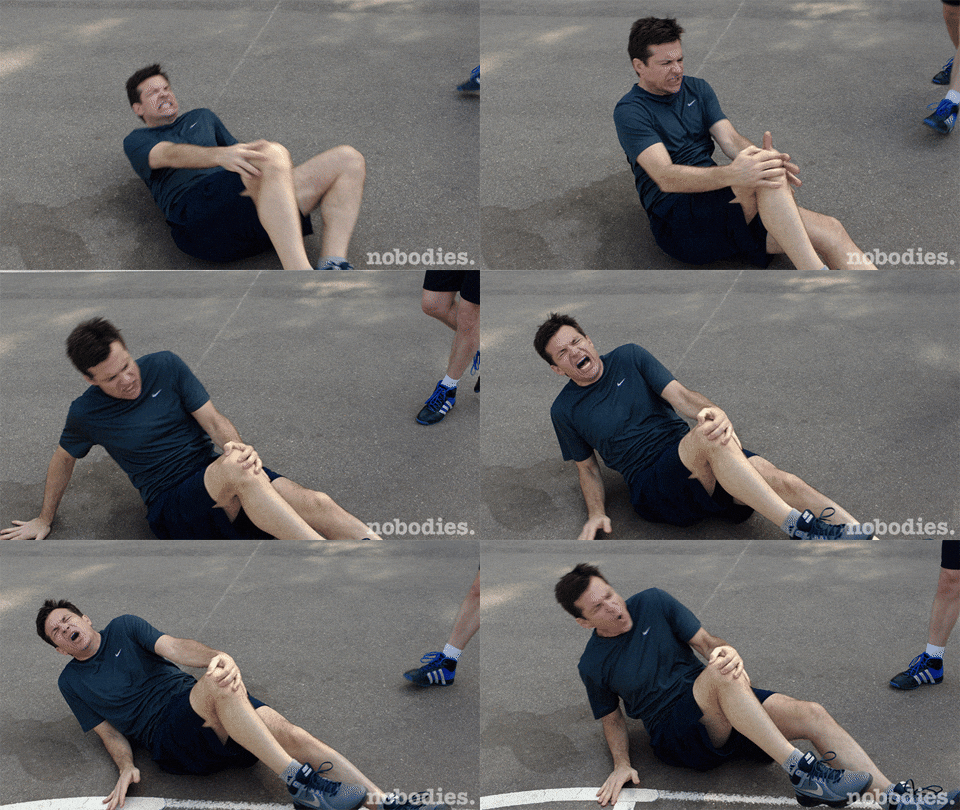
IT band syndrome is one of the most common chronic overuse injuries in cyclists, and it tends to be frustrating because the IT band itself is not a muscle — you cannot stretch it in any meaningful clinical sense, and foam rolling, while not useless, addresses only part of the problem. A 2022 study published in International Journal of Environmental Research and Public Health (PMC/NIH) found that self-myofascial release reduced pain and improved performance in cyclists with IT band syndrome in the short term, but identified that the underlying causes — hip abductor weakness, cleat misalignment, saddle height — must also be addressed for lasting resolution.[8]
Chiropractic care for IT band syndrome typically combines soft tissue work on the lateral hip and thigh musculature, hip joint mobilization where restriction is present, and corrective exercise targeting the gluteus medius — the hip stabilizer whose weakness is most consistently implicated in IT band overload. Cleat and saddle position should also be evaluated, which is why we often coordinate with local bike fitters when the clinical picture warrants it.
Evidence-based checklist for San Diego cyclists
Get a professional bike fit — saddle height affects knee pain, joint loading, and efficiency simultaneously[5]
Add thoracic extension mobility work off the bike to counteract the sustained flexion of riding
Strengthen the glutes and hip abductors — they stabilize the pelvis and protect both the lumbar spine and the IT band[4]
Vary your hand position regularly on longer rides to reduce sustained cervical loading
If knee or back pain appears on rides over a certain duration or intensity, that pattern is meaningful — get it evaluated before it becomes a chronic issue
Consider a chiropractic check-in at the start of a high-volume training block, not only when something already hurts
San Diego's cycling infrastructure keeps getting better. The Bayshore Bikeway expansion, the growing network of protected lanes in North Park and Mission Valley, the year-round riding weather — there has never been a better time to be a cyclist here. All of that is a lot more enjoyable when your back isn't audibly disagreeing with your handlebar drop. We're here to make sure it doesn't.
References
Antequera-Vique JA, Oliva-Lozano JM, Muyor JM. Effects of cycling on the morphology and spinal posture in professional and recreational cyclists: a systematic review. Sports Biomech. 2023;22(4):567–596. PubMed
Mellion MB. Neck and back pain in bicycling. Clin Sports Med. 1994;13(1):137–164. PubMed
Burnett AF, et al. Spinal kinematics and trunk muscle activity in cyclists with and without non-specific chronic low back pain. Man Ther. 2004. PubMed
Streisfeld GM, et al. Relationship between body positioning, muscle activity, and spinal kinematics in cyclists with and without low back pain: a systematic review. Sports Health. 2017;9(1):75–79. PMC / NIH