
Back-to-School Backpack Safety: How To Avoid Becoming a Human Pack Mule
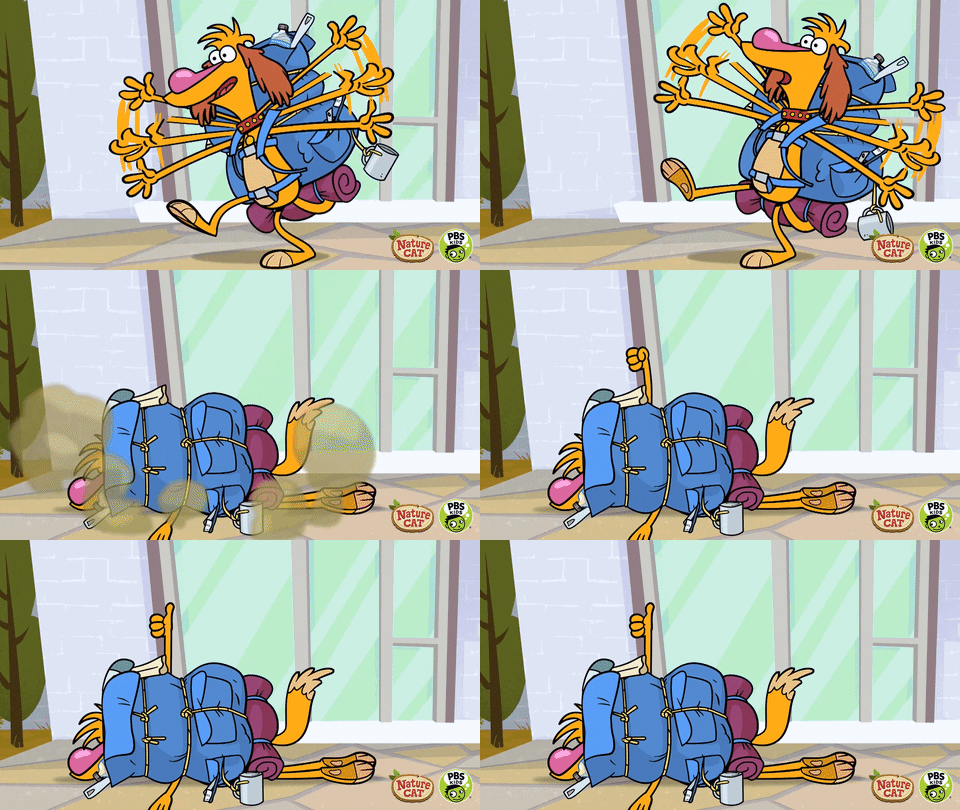
Every August, backpacks across the country quietly transform from "school bag" into "small piece of checked luggage." Textbooks, a laptop, a water bottle the size of a fire extinguisher, an emergency hoodie, three loose pencils rolling around at the bottom — it adds up fast. And it adds up on a spine that's still under construction.
The magic number(s)
Different reputable sources land in slightly different spots, but they all cluster around the same idea: less is more.
Harvard Health Publishing advises that a child's backpack shouldn't exceed 15–20% of their body weight.
The American Academy of Pediatrics (via its patient-education site, HealthyChildren.org) sets the ceiling at 15% of body weight, and notes that if your child has to lean forward to support the bag, it's too heavy.
Splitting the difference, a solid rule of thumb is: aim for 10–15%, and don't cross 15–20%. For a 60-pound kid, that's roughly 6–9 pounds of maximum comfortable cargo — not the entire contents of their locker.
Quick math, no calculator required:
Child's WeightTarget Backpack Weight (10–15%)50 lbs5–7.5 lbs70 lbs7–10.5 lbs100 lbs10–15 lbs
Why it actually matters (not just parental paranoia)
Harvard Health explains that heavy loads place stress on kids' spines and shoulders, causing muscle strain, fatigue, and — for some — pain serious enough to warrant a doctor's visit. Overloading can also encourage poor posture and slouching habits that are annoyingly easy to pick up and hard to shake later.
The reassuring part: the American Academy of Pediatrics notes that backpacks haven't been shown to cause scoliosis or lasting structural damage. This isn't a doomsday scenario — it's more like wearing shoes two sizes too small every day: uncomfortable, avoidable, and worth fixing.

The fit matters as much as the weight
A backpack loaded "correctly" but worn wrong can still cause trouble. According to HealthyChildren.org (AAP):
Use both straps. One-shoulder carrying isn't a fashion risk-worth-taking — it shifts weight unevenly and can cause the body to lean and compensate.
Snug it up. The pack should sit about 1–2 inches below the shoulders and never hang more than 4 inches below the waistline.
Use the waist or chest strap, if there is one. It moves weight off the shoulders and distributes it more evenly.
Pack heavy items close to the back. This keeps the load's center of gravity closer to your child's body instead of pulling them backward.
Choose a properly sized bag. Bigger isn't better — more room just invites more stuff.
The backpack diet plan
Harvard Health's practical suggestion: teach organizational habits so your kid isn't hauling every subject home every night. Folders per subject, frequent locker trips between classes, or even a second set of textbooks kept at home can all lighten the daily load. A rolling backpack is also a completely legitimate option if your school allows it.
When to actually worry
Both Harvard Health and the AAP agree: don't dismiss back pain in a child or teen as "just growing pains," especially if it shows up at times other than while wearing the backpack. That's a good cue to check in with your pediatrician.
Sources
Harvard Health Publishing, Bad backs and backpacks — health.harvard.edu/pediatric-health/bad-backs-and-backpacks
American Academy of Pediatrics, Backpack Safety, HealthyChildren.org — healthychildren.org/English/safety-prevention/at-play/Pages/Backpack-Safety.aspx